How it works
AI Tarot Reading
A free AI tarot reading, written in seconds, and a straight account of what the AI is actually doing, what it is told not to claim, and where a human reader is still better.
No account, no card details, no email required.
In short
The cards are drawn at random. Their traditional meanings, the same ones published on this site, are handed to a language model along with your question. The model writes the interpretation, under explicit instructions never to guarantee an outcome. That is the entire trick, and there is no claim of foresight anywhere in it.
How the AI tarot reading works
Step 1
You ask and draw
You write one question, pick a spread, and draw your cards. The draw is random: the model has no say in which cards come up, and nothing about your question influences the shuffle.
Step 2
The traditional meanings are attached
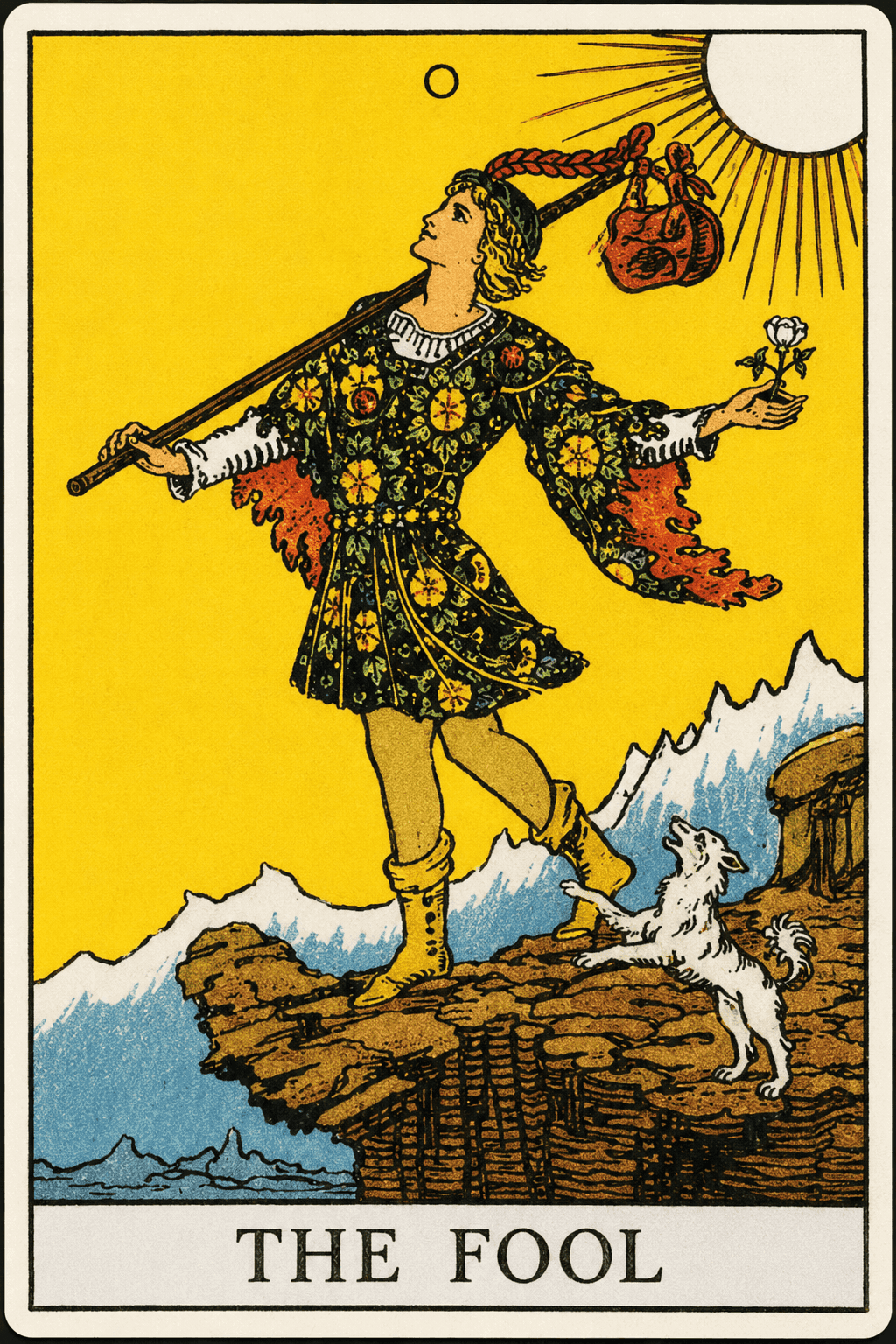
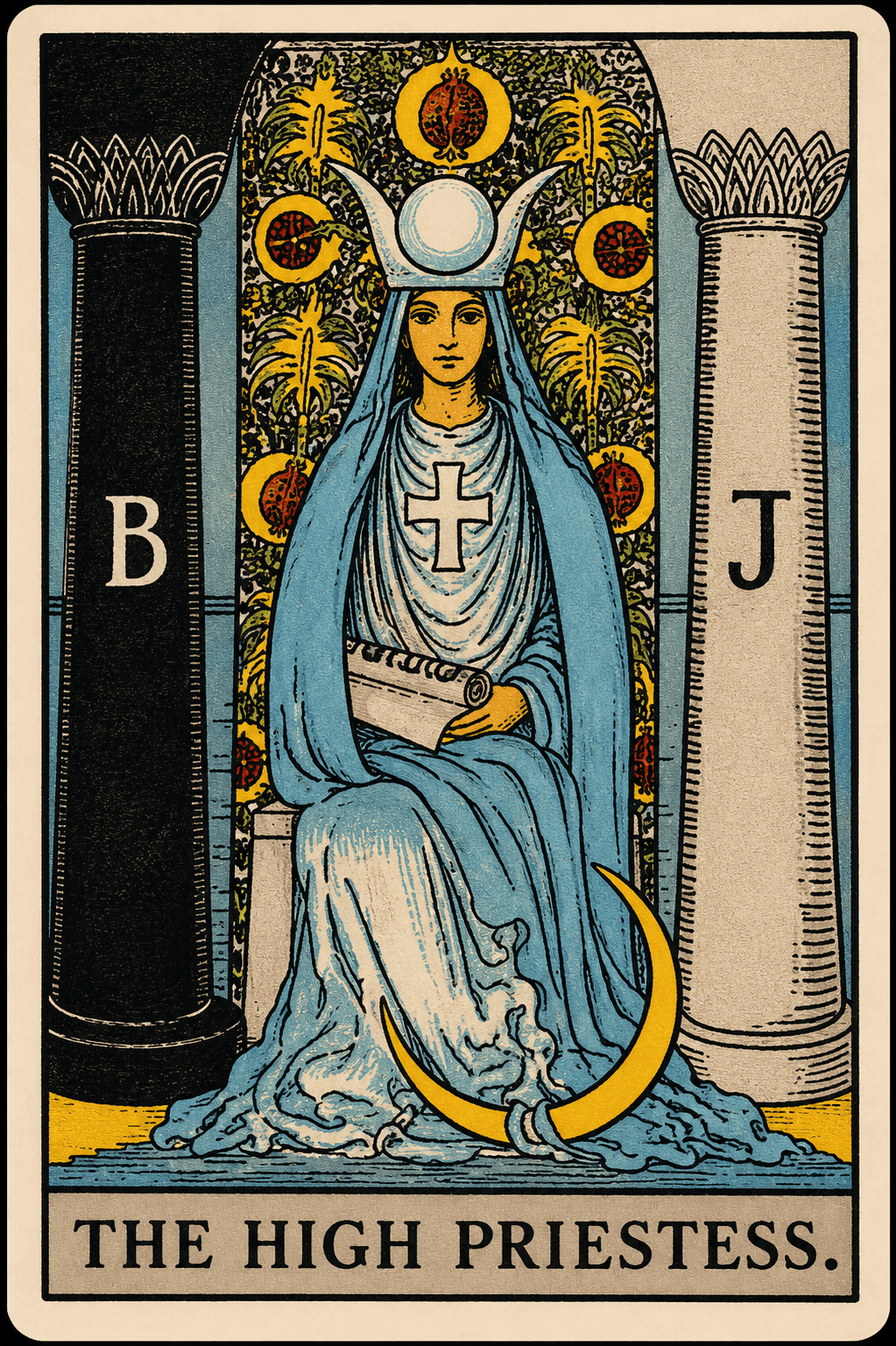
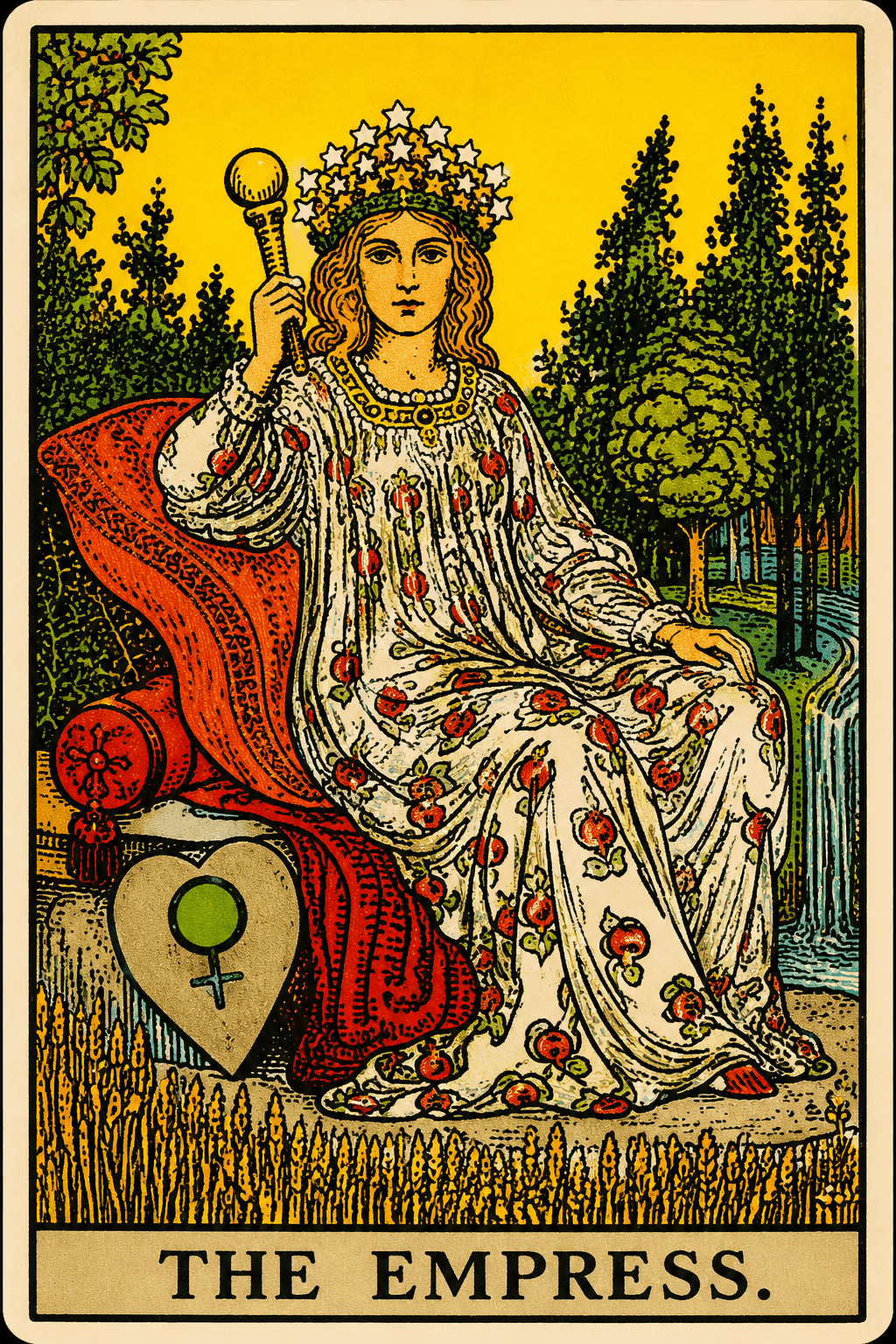
Each drawn card is sent along with its upright or reversed meaning, keywords, symbolism, and the meaning specific to your category, all from the same 78-card library published on this site. The model is not recalling tarot from training data; it is given this site's own reference text.
Step 3
The model writes the interpretation
A large language model connects those meanings to your specific question and the position each card landed in. This is the part it is genuinely good at: relating several fixed meanings to one situation in plain language.
Step 4
It is held to explicit limits
The model is instructed not to guarantee outcomes, not to predict death or illness, not to give legal or financial instructions, and not to claim supernatural certainty. It is told to write in terms of what a card may suggest or invite you to consider.
AI tarot vs a human reader vs a general chatbot
Each is better at something different. This is where an AI reading genuinely wins and where it plainly does not.
| AI reading here | Human reader | General chatbot | |
|---|---|---|---|
| Cost | Free, no account | Typically $30–150 per session | Free to paid, varies |
| Card meanings used | This site's published 78-card library, passed in with every reading | The reader's own training and tradition | Whatever the model recalls, unverifiable and inconsistent |
| The draw | Random, independent of the model | Physical shuffle | The model invents the cards, which is not a draw |
| Follow-up questions | Not in a free reading, you draw again | Yes, in real time, the clearest advantage | Yes |
| Reads the room | No. It has your question and nothing else | Yes: tone, hesitation, what you did not say | No |
| Consistency | The same cards and question produce a consistent reading | Varies by reader and by day | Varies between runs |
What we will not claim
So Tarot treats tarot as a reflection tool for entertainment and personal insight, not prediction, and not advice. No reading here will forecast an outcome, name a date, diagnose anything, or tell you what another person is thinking. The model is instructed against all of it, and where a reading touches money, health, or the law, it is written to send you to someone qualified rather than to answer.
AI tarot reading: frequently asked questions
What is an AI tarot reading?
A reading where the cards are drawn at random and a language model writes the interpretation. On this site the model is given each drawn card's traditional meaning, keywords, and symbolism from the published 78-card library, then asked to relate them to your specific question and card positions.
Is AI tarot accurate?
Tarot is a reflection tool rather than a prediction method, so accuracy is the wrong test for any reading, AI or human. The fair question is whether the interpretation is faithful to the cards drawn and useful to think with. Because the traditional meanings are supplied with every reading rather than recalled from memory, an AI reading is more consistent than a general chatbot's, which is a real difference, not a claim about foresight.
Is the AI tarot reading free?
Yes. A full reading is free with no account, no email, and no card details. An account is only needed to save readings, journal on them, or track patterns across months.
Is AI tarot better than a human reader?
For a fast, consistent interpretation at no cost, it does the job well. A human reader is better whenever the conversation matters: they can ask follow-up questions, hear what you hesitate over, and adjust. Nothing here is trying to replace that.
What happens to my tarot question?
Your question is sent to the AI provider so the reading can be written. That is unavoidable for an AI reading. It is never sent to analytics: analytics receives funnel steps, spread and card counts, and reliability data, never your question, the generated reading, or your journal writing.
Can AI tarot predict the future?
No, and the model is explicitly instructed not to claim it can. It writes in terms of what a card may suggest or invite you to consider. Any tarot service promising a guaranteed outcome is selling certainty it does not have.
Is this better than asking ChatGPT for a tarot reading?
It differs in one structural way: a general chatbot invents the cards it claims you drew and recalls meanings inconsistently. Here the draw is random and independent of the model, and the meanings come from a fixed, published library you can check on this site card by card.
Try it on a real question
One honest question, your cards, a full interpretation. Free, and no account needed.