Tarot Glossary
Tarot terms, defined in plain language.
A quick reference for the language of tarot: the two Arcana, the four suits, court cards, upright and reversed, spreads, and the words readers use. Each term is defined simply, with links to explore further.
Tarot
Tarot is a deck of 78 illustrated cards used for reflection, insight, and storytelling. A tarot reading lays out selected cards and interprets their traditional meanings in relation to a question. A reflective practice treats tarot as a structured mirror for your own thinking, not a tool for predicting fixed events.
Major Arcana
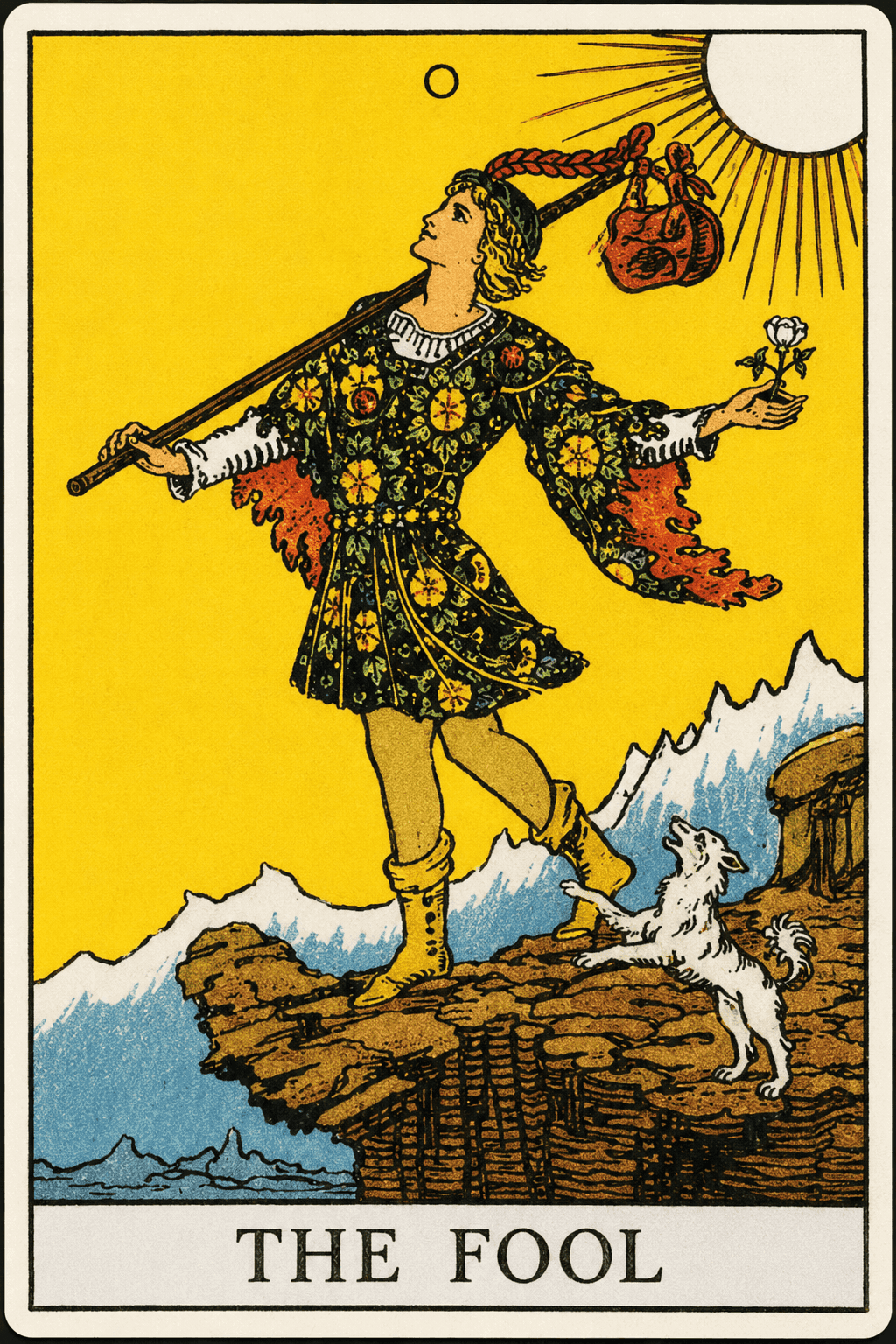
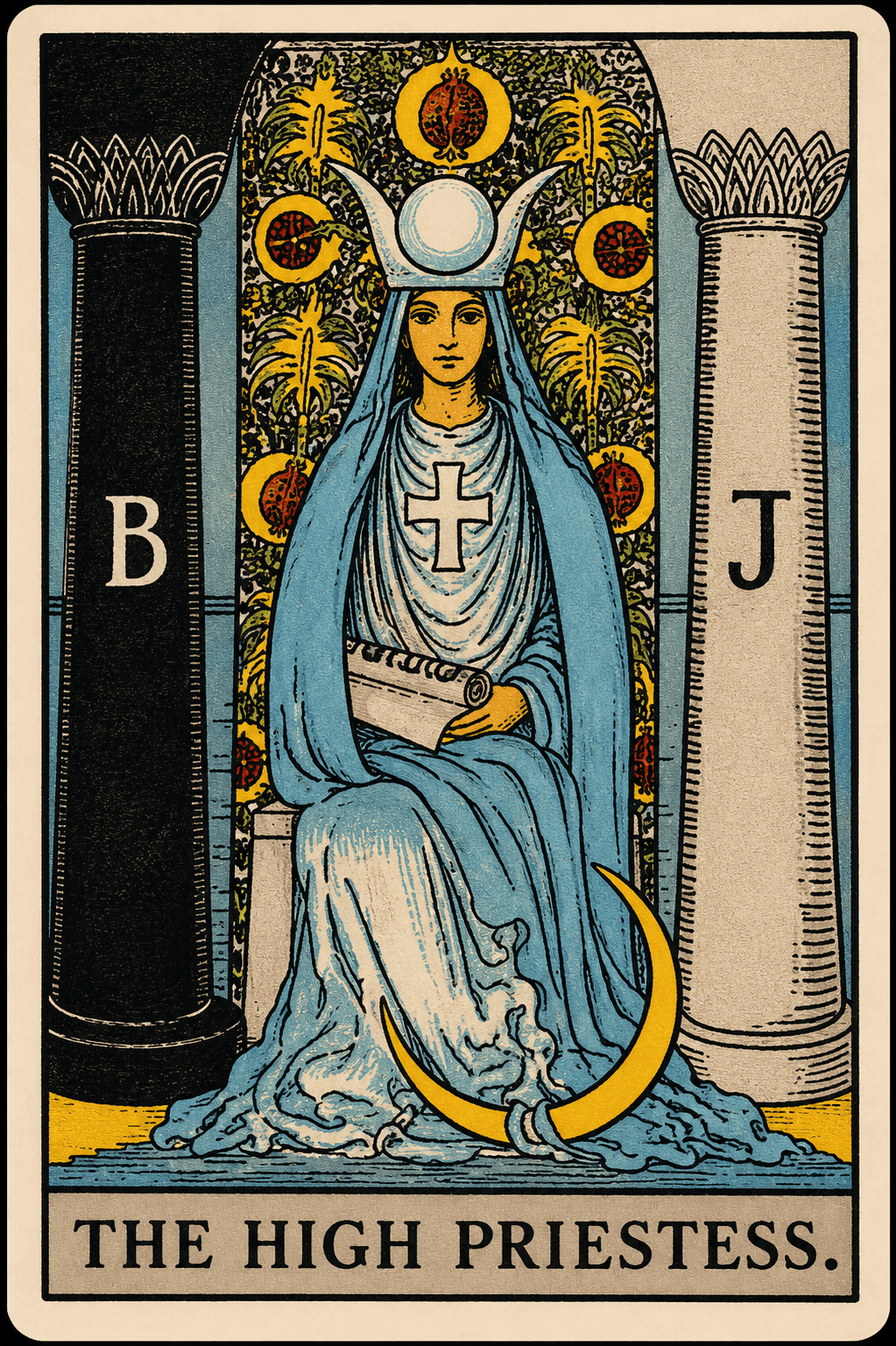
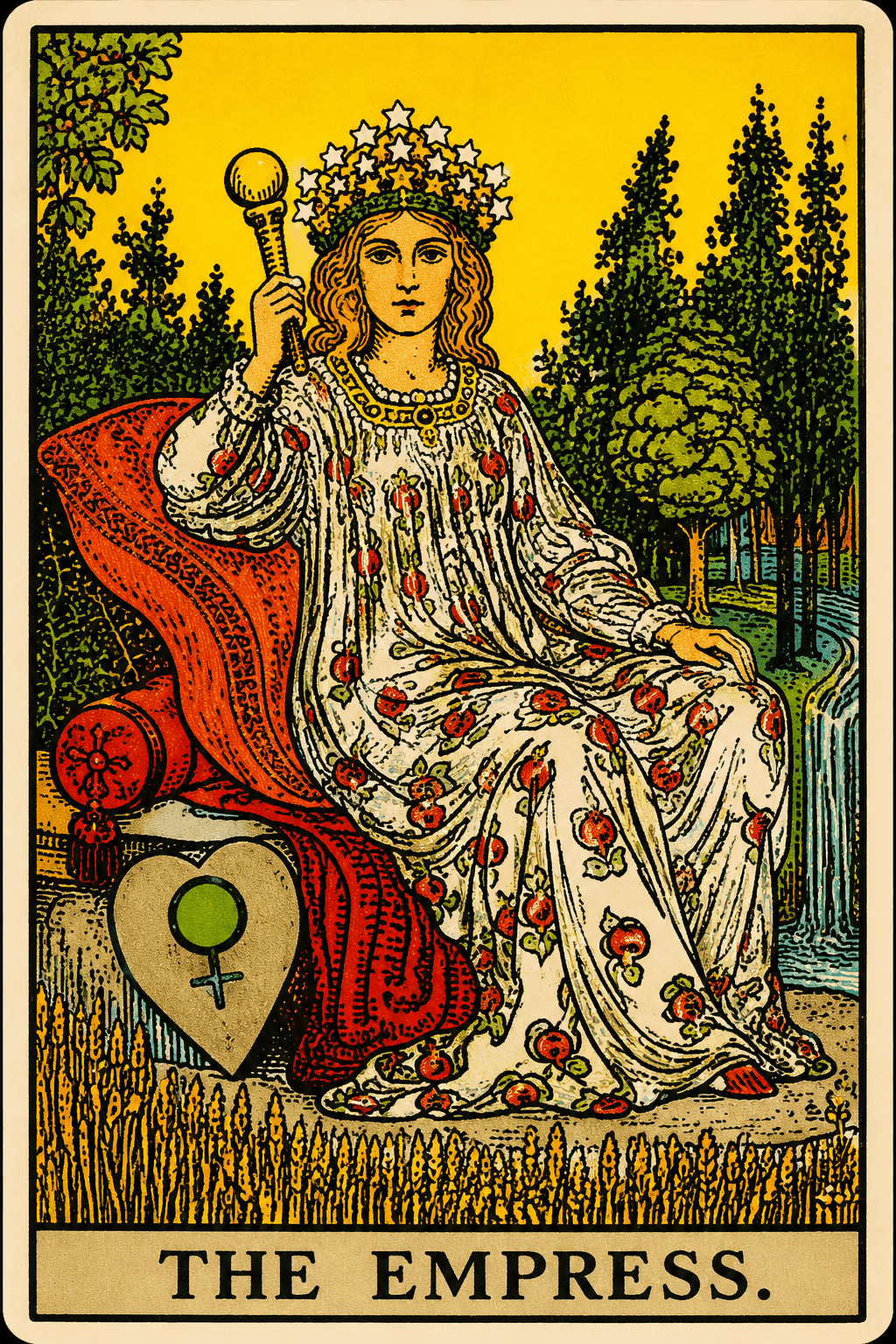
The 22 Major Arcana are the tarot's archetypal cards, numbered 0 (The Fool) through 21 (The World). They represent the big themes and turning points of a life, major forces rather than everyday detail. In a reading, a Major Arcana card usually signals that the matter carries real weight.
Minor Arcana
The 56 Minor Arcana handle the everyday texture of life. They divide into four suits of 14 cards each, Ace through Ten plus four court cards. Where the Major Arcana mark big themes, the Minor Arcana describe the practical, day-to-day situations those themes play out in.
Arcana
Arcana (singular: arcanum) means “secrets” or “mysteries.” In tarot it refers to the two groups of cards: the Major Arcana (22 archetypal cards) and the Minor Arcana (56 suit cards). Every tarot card belongs to one or the other.
Suit
A suit is one of the four families of the Minor Arcana: Wands, Cups, Swords, and Pentacles. Each suit is tied to an element and a domain of life, and runs from Ace through Ten plus four court cards.
Wands
Wands are the tarot suit of fire, governing energy, drive, creativity, ambition, and action. When Wands dominate a reading, the theme is usually motivation, momentum, or the spark of wanting to do something.
Cups
Cups are the tarot suit of water, governing emotions, relationships, intuition, and the inner life. When Cups fill a reading, the situation is emotional at its core: love, connection, grief, or joy.
Swords
Swords are the tarot suit of air, governing thought, communication, conflict, and truth. Several Swords cards are challenging by design; the suit names the mental and relational difficulties we'd often rather avoid.
Pentacles
Pentacles (also called Coins or Discs) are the tarot suit of earth, governing work, money, home, health, and the material world. When Pentacles lead a reading, the question is grounded in tangible, practical life.
Court Cards
The court cards are the four ranked cards in each Minor Arcana suit: Page, Knight, Queen, and King. They often represent people, personalities, or approaches, a way of being, or someone showing up in your situation.
Pip Cards
Pip cards are the numbered Minor Arcana, Ace through Ten in each suit. Their meaning comes from combining the suit's element with the number's stage: the Eight of Pentacles, for example, blends earthy, material Pentacles with the patient effort of an Eight.
Read the full Pip Cards pageAces
The four Aces are the first card of each Minor Arcana suit and represent pure, new potential in that suit's domain: a fresh spark of energy (Wands), feeling (Cups), thought (Swords), or opportunity (Pentacles).
Read the full Aces pageUpright
An upright card is one drawn right-side-up and read in its primary, outward sense. Most beginners read every card upright before adding reversals.
Reversed
A reversed card is drawn upside-down. Rather than simply meaning the opposite, a reversal usually signals that the card's energy is turned inward, blocked, delayed, or not fully expressed, present but complicated.
Spread
A spread is the pattern in which tarot cards are laid out, where each position carries a specific meaning. Common spreads include the one-card draw, the three-card spread, and the ten-card Celtic Cross.
Three-Card Spread
The three-card spread lays out three cards in a row, each with an assigned role. Popular versions include past–present–future and situation–obstacle–advice. It's the spread most readers learn first because it tells a small story without becoming a maze.
Celtic Cross
The Celtic Cross is a classic ten-card tarot spread that examines a situation in depth: its heart, the challenge, the past and likely path, hopes and fears, and the probable outcome. It's the most detailed of the widely-used spreads.
Querent
The querent is the person a tarot reading is for, the one asking the question. When you read for yourself, you're your own querent.
Read the full Querent pageSignificator
A significator is a card chosen to represent the querent or the subject of a reading before the cards are drawn, often selected by personality or situation. Many modern readers skip it.
Read the full Significator pageCartomancy
Cartomancy is the practice of reading, or drawing meaning from, a deck of cards. Tarot reading is a form of cartomancy, as is reading with ordinary playing cards or oracle decks.
Read the full Cartomancy pageRider-Waite-Smith
The Rider-Waite-Smith (RWS) deck, published in 1909 and illustrated by Pamela Colman Smith, is the most influential modern tarot deck. Its fully illustrated scenes on every card shaped how most people learn and interpret tarot today.
Read the full Rider-Waite-Smith pageOracle Cards
Oracle cards are a divination deck with no fixed structure: any number of cards, themes, and meanings, defined by the deck's creator. Unlike tarot, which has a standard 78-card system, oracle decks vary widely from one to the next.
The Fool's Journey
The Fool's Journey is a way of reading the 22 Major Arcana as a single story: The Fool's path from innocence (0) through the lessons and turning points of life to completion in The World (21). It's a popular lens for understanding how the Majors relate.
Read the full The Fool's Journey pageClarifying Card
A clarifying card is an extra card drawn to shed light on a card or position that felt ambiguous. Used sparingly it adds nuance; drawn repeatedly it can just avoid sitting with an uncomfortable answer.
Read the full Clarifying Card pageReading
A tarot reading is the act of drawing and interpreting cards in response to a question or situation. A reflective reading treats the result as a prompt for thinking clearly, not a prediction of fixed outcomes.
Shuffling & Cutting
Shuffling mixes the deck before a reading; cutting divides and reorders it. Both randomize the draw and, for many readers, are a way of focusing intention before the cards are laid out.
Read the full Shuffling & Cutting pageYes or No Reading
A yes-or-no tarot reading draws a card (or cards) to get a directional answer to a closed question. It's read by the card's leaning, bright, forward cards lean yes; heavy or blocked cards lean no or “not yet.”
Daily Card
A daily card is a single card pulled each day as a small prompt for reflection: a theme to notice or a question to sit with, rather than a forecast of the day ahead.
Elemental Dignities
Elemental dignities are a reading technique that considers how neighboring cards' elements (fire, water, air, earth) strengthen or weaken each other. Complementary elements reinforce a card; opposing ones can mute or complicate it.
Read the full Elemental Dignities pageIntuition
In tarot, intuition is the reader's own sense of what a card means in context: the personal, felt layer of interpretation that works alongside the card's traditional meaning.
Read the full Intuition pageCommon questions
How many cards are in a tarot deck?
A standard tarot deck has 78 cards: 22 Major Arcana and 56 Minor Arcana, the latter split into four suits of 14 cards each.
What is the difference between the Major and Minor Arcana?
The 22 Major Arcana cover big, archetypal life themes and turning points; the 56 Minor Arcana, divided into four suits, handle everyday, practical situations.
Do reversed tarot cards mean the opposite?
Not usually. A reversed card more often means the card's energy is blocked, delayed, or turned inward, present but complicated, rather than simply its opposite.
What are the four tarot suits?
The four Minor Arcana suits are Wands (fire (energy and drive), Cups (water) emotion and relationships), Swords (air (thought and conflict), and Pentacles (earth) work and money).
What is the difference between a tarot reading and a tarot spread?
The spread is the layout, the set of positions and what each one asks. The reading is the whole act: the question, the draw, and the interpretation. You choose a spread as part of doing a reading.
What does querent mean in tarot?
The querent is the person a reading is for: the one whose question is being asked. When you read for yourself you are both reader and querent. The word comes from the Latin for "one who seeks".
What are pip cards in tarot?
Pip cards are the numbered Minor Arcana, Ace through Ten in each suit, forty cards in total. The term distinguishes them from the sixteen court cards, which are also Minor Arcana but are read as people or approaches rather than numbered stages.
What is the Fool's Journey?
A way of reading the 22 Major Arcana as one continuous story, from The Fool at 0 to The World at 21, with each card marking a stage of development. It is a twentieth-century teaching device rather than part of tarot's original design, and it remains a genuinely useful way to learn the Majors.