Reading Craft
How to read tarot card combinations.
When two tarot cards appear together, their meaning comes from how they relate. One card colours and qualifies the other. Here's the simple method for reading pairs, plus worked examples of some of the best-known combinations.
How to read a combination
- Read each card on its own first, then ask how the two relate, the reading lives in the relationship, not in either card alone.
- A Major Arcana card usually sets the overarching theme; Minor Arcana cards fill in the everyday, practical detail.
- Same-suit pairs amplify a single feeling or theme; opposing elements (fire + water, air + earth) can temper or complicate each other.
- A repeated number, suit, or card signals emphasis, a theme insisting on your attention.
- Court cards often represent a person, or the way someone is approaching the situation.
- Above all, read the pair as one sentence about your actual question, not two separate verdicts.
The Lovers + Two of Cups
One of the strongest love pairings in the deck. The Lovers brings genuine alignment and a meaningful choice; the Two of Cups adds mutual, two-way connection. Together they point to a bond where attraction, shared values, and reciprocity all line up, a relationship worth choosing consciously, not just falling into.
Read the full The Lovers + Two of Cups pairingAce of Cups + The Lovers
The beginning of a heartfelt connection with real depth. The Ace of Cups is a new overflow of feeling, fresh love or renewed emotional openness; The Lovers adds genuine alignment and a conscious choice. Together they point to a new relationship, or chapter, that isn't just exciting but truly aligned with what you value.
Read the full Ace of Cups + The Lovers pairingTwo of Cups + Ten of Cups
A powerful long-term love signal. The Two of Cups is the spark of mutual connection; the Ten of Cups is that connection matured into whole, lasting fulfillment. Together they trace a relationship deepening from early reciprocity into settled, shared happiness, a strong sign of a bond with real staying power.
Read the full Two of Cups + Ten of Cups pairingTen of Cups + The Sun
An exceptionally warm, fortunate combination. The Ten of Cups is deep, lasting emotional fulfillment: home, family, belonging; The Sun adds radiant joy and clarity. Together they describe a genuinely happy season with no hidden catch: a fulfilling relationship or home life, bright and settled. The advice is simply to notice and enjoy it.
Read the full Ten of Cups + The Sun pairingThe Sun + The Star
A radiantly hopeful combination. The Star is quiet renewal and returning faith after difficulty; The Sun is full, uncomplicated joy and clarity. Together they suggest healing giving way to genuine happiness: the hard part is behind you, and what's arriving is bright, warm, and real rather than wishful thinking.
Read the full The Sun + The Star pairingDeath + The Tower
Two of the most intense transformation cards together. Death marks a necessary ending and release; The Tower brings sudden, external upheaval. Read side by side, they describe a profound clearing-out: an old structure collapsing so a truer one can be built. Disruptive and uncomfortable, but ultimately a reset that had to happen.
Read the full Death + The Tower pairingThe Tower + The Star
Collapse followed by healing, one of the deck's most reassuring sequences. The Tower shatters something that wasn't stable; The Star brings hope, renewal, and calm afterward. Together they promise that the upheaval, however jarring, clears the way for genuine recovery. What follows the disruption is quieter, truer, and more hopeful.
Read the full The Tower + The Star pairingThree of Swords + The Tower
A painful, unavoidable pairing. The Three of Swords is genuine heartbreak; The Tower is sudden collapse or a shattering truth. Together they point to a hard reality breaking an illusion: real grief, but grief that removes something that was never as stable as it seemed. Let it fall; rebuilding on honest ground follows.
Read the full Three of Swords + The Tower pairingThree of Swords + The Star
Heartbreak beginning to heal. The Three of Swords is sharp, honest grief; The Star is hope and renewal returning. Together they describe pain that is real but already softening: the worst of the hurt is passing, and quiet recovery is genuinely underway. A gentle, encouraging pairing after a hard chapter.
Read the full Three of Swords + The Star pairingThe Devil + Eight of Swords
A pairing about feeling trapped. The Devil points to attachment or a binding pattern; the Eight of Swords is restriction that's largely self-imposed by fear. Read together, they're less a sentence than a wake-up call: the constraint feels total but is looser than it seems. Naming what's really holding you is the first step free.
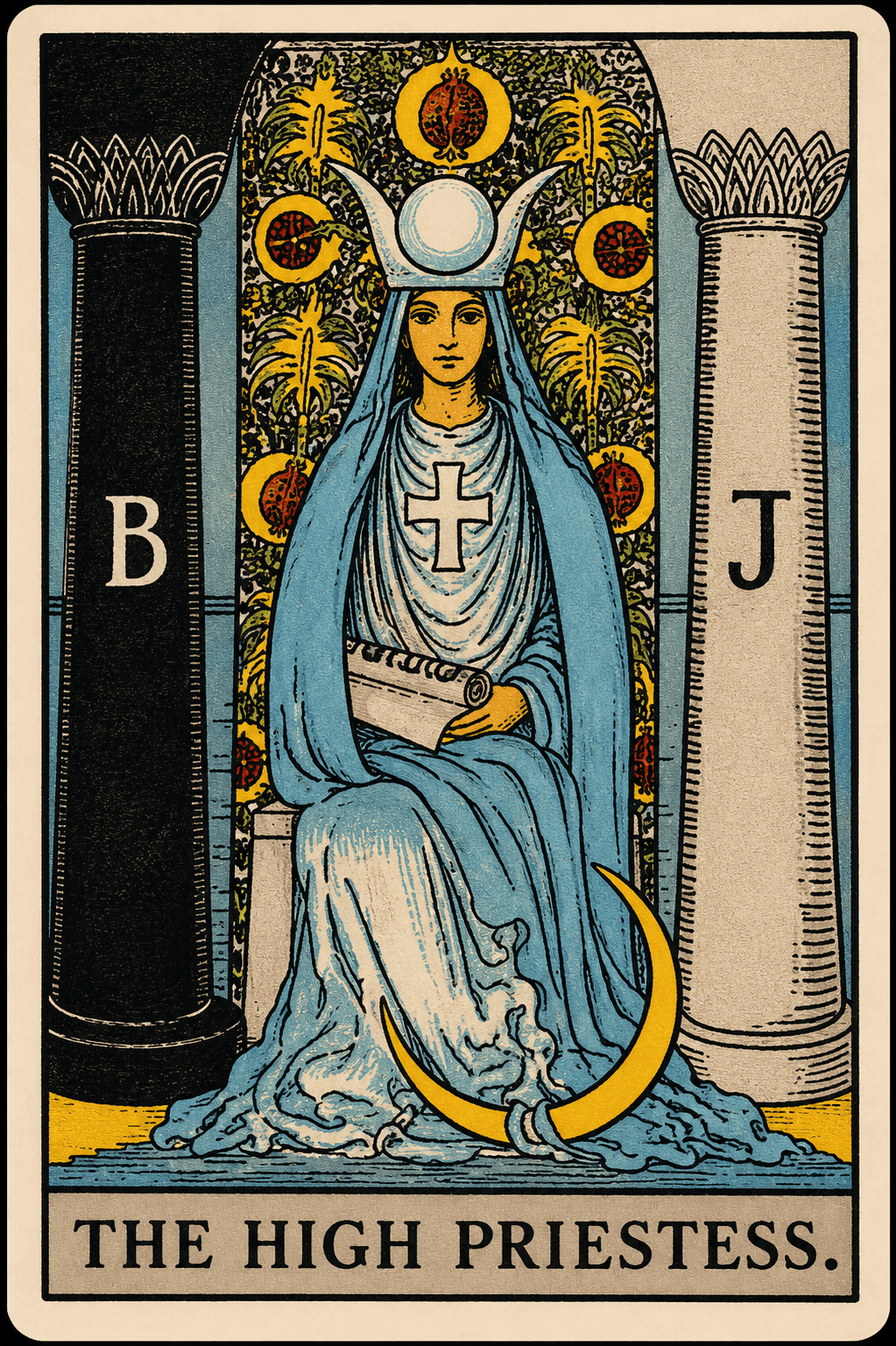
Read the full The Devil + Eight of Swords pairingThe Moon + The High Priestess
A deeply intuitive, mysterious pairing. Both cards point beneath the surface, the High Priestess to inner knowing still forming, the Moon to uncertainty and things not yet fully visible. Together they counsel patience and trust in your instincts: something significant is at work that can't yet be seen clearly. Don't force the clarity.
Read the full The Moon + The High Priestess pairingWheel of Fortune + The Chariot
A fortunate turn met with focused drive. The Wheel of Fortune brings a change of circumstances and good timing that isn't fully in your control; The Chariot adds determination and directed will. Together they suggest a lucky shift you can capitalize on: luck and effort aligning to move you decisively forward if you stay focused.
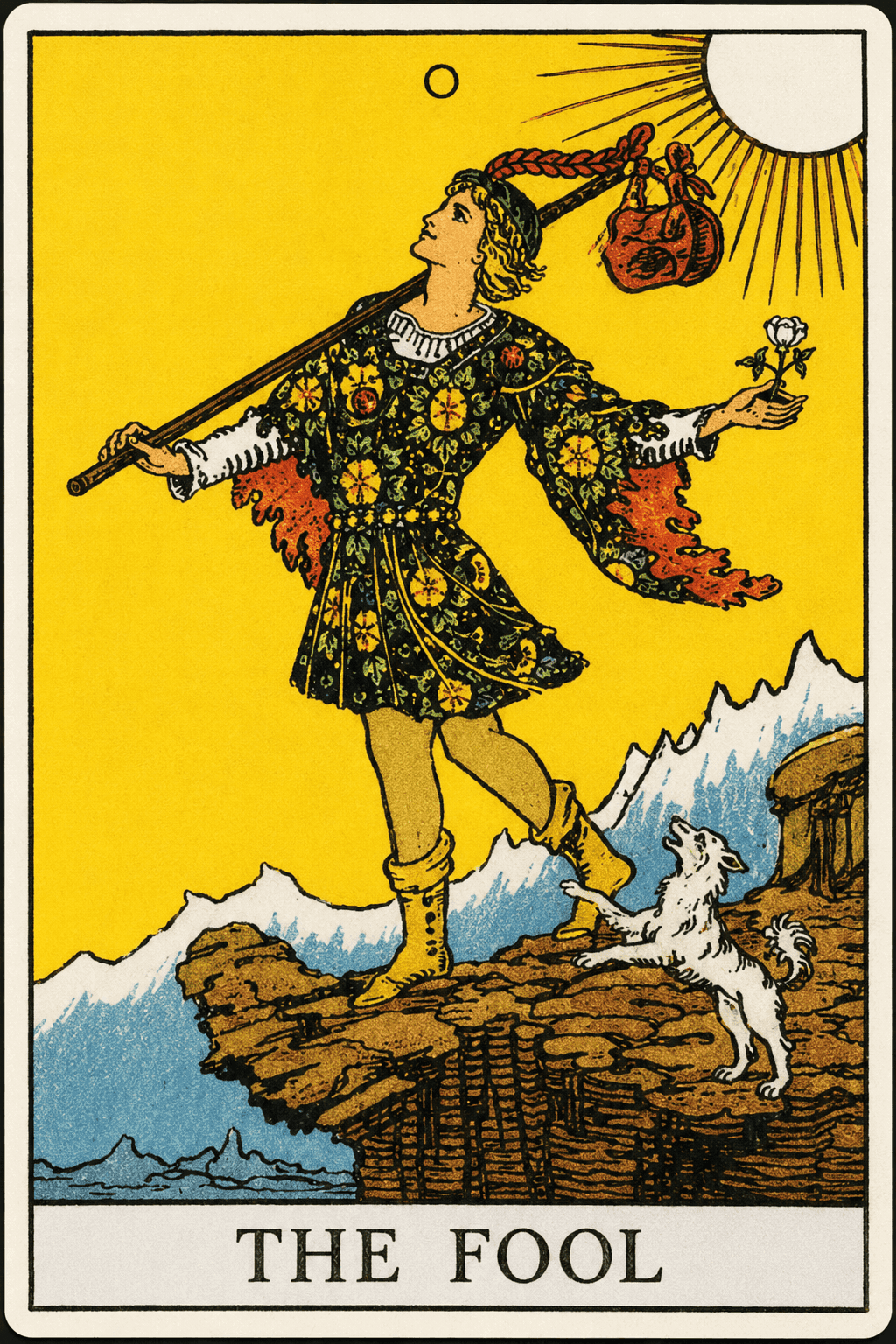
Read the full Wheel of Fortune + The Chariot pairingThe Fool + The World
The beginning and the end of the journey, side by side. The World marks a cycle completed with real accomplishment; The Fool is a fresh leap into the unknown. Together they signal a chapter genuinely finishing as a new one opens, a sign you're ready to begin again, carrying everything you've learned.
Read the full The Fool + The World pairingThe Lovers + The Devil
The deck's most pointed pairing, and deliberately so, in the Rider-Waite-Smith images the same two figures stand under an angel in The Lovers and under a horned figure in The Devil, now chained. Together the cards ask whether a bond is still chosen or has quietly become something you are staying inside out of habit, fear, or want.
Read the full The Lovers + The Devil pairingThe Devil + The Tower
A bond or dependency, followed by the collapse of whatever was built on top of it. The Devil names the attachment you are partly maintaining; The Tower is the structure coming down. Read in sequence they describe the specific and common way a situation ends: not out of nowhere, but because the foundation had a known flaw.
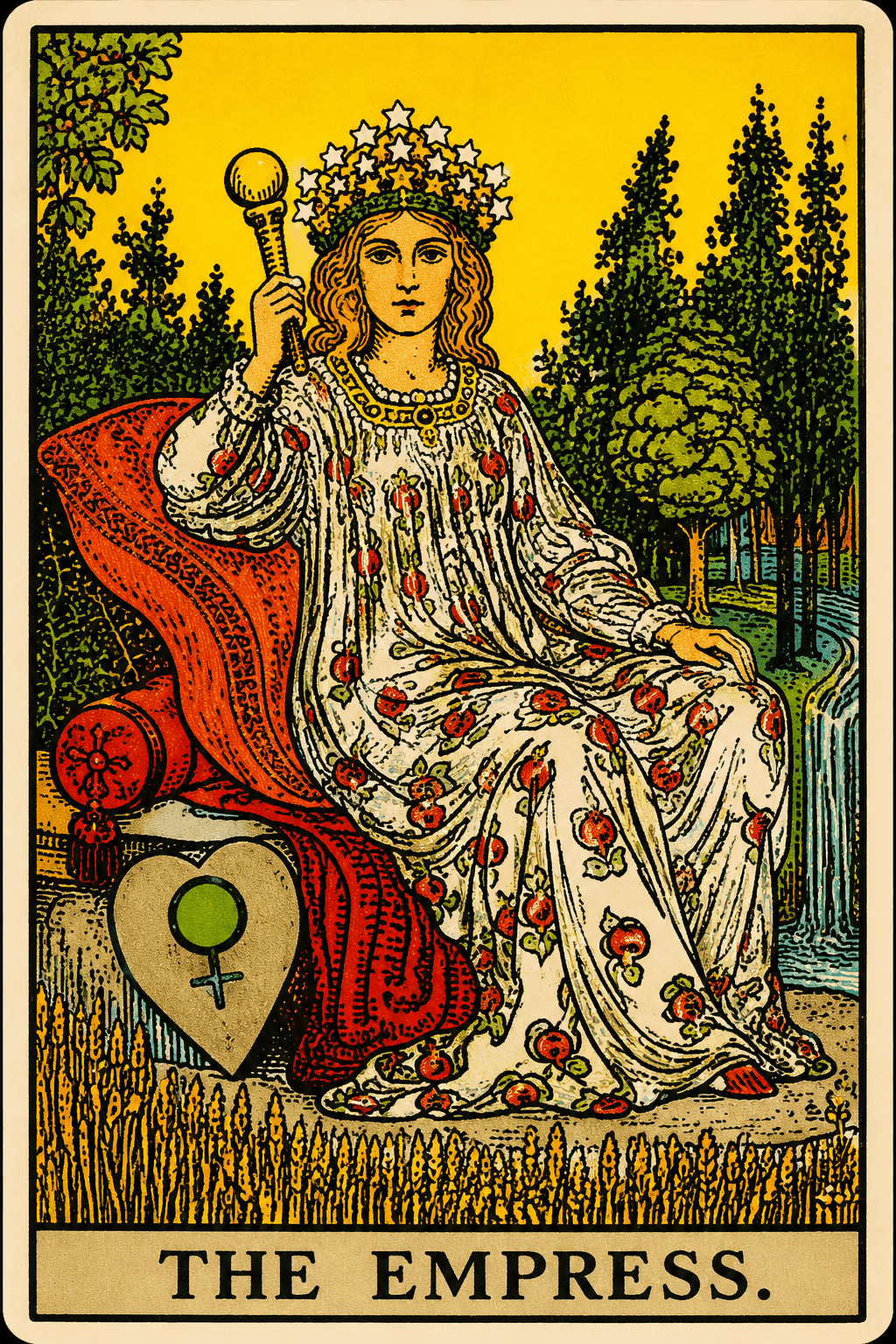
Read the full The Devil + The Tower pairingThe Empress + The Emperor
Two complementary forms of authority in one reading, abundance and structure, nurture and limit. Together they usually describe a situation needing both at once, or a person torn between them. They also frequently read as literal parental figures, or as the balance of care and boundary in how you are handling something.
Read the full The Empress + The Emperor pairingThe Hanged Man + Death
The pairing that separates waiting from ending. The Hanged Man is voluntary suspension. You could move and are choosing not to. Death is not optional. Together they usually mean a pause has run its course, and what could once have been waited out now has to be let go.
Read the full The Hanged Man + Death pairingThe Magician + The High Priestess
Cards 1 and 2, and two opposite relationships to knowing. The Magician acts, declares, and makes things happen outwardly; The High Priestess holds what is not yet ready to be spoken. Together they ask whether the moment calls for doing something or for not moving until you actually know.
Read the full The Magician + The High Priestess pairingThe Chariot + Strength
Two ways of getting control of the same situation. The Chariot takes it by force of will and direction; Strength gets it through patience and refusal to escalate. Together they are rarely a contradiction. They describe a situation where one approach has been tried and the other is the one that will actually work.
Read the full The Chariot + Strength pairingJustice + Judgement
The two most frequently confused Major Arcana, and a useful pairing precisely because of it. Justice is consequence and accounting, what your actions actually earned. Judgement is a reckoning and a call, seeing the whole of something and being asked to respond. Together they describe understanding what happened, and then having to do something about it.
Read the full Justice + Judgement pairingNine of Swords + The Moon
Anxiety meeting genuine uncertainty. The Nine of Swords is the dread you generate at three in the morning; The Moon is the part of the situation that really is unclear. Together they describe how hard it is to tell those two apart, and why the first tends to fill in the gaps left by the second.
Read the full Nine of Swords + The Moon pairingThe Hierophant + The Lovers
Tradition and personal choice in the same reading. The Hierophant is the inherited framework: convention, family expectation, the recognised form of a thing. The Lovers is what you would choose on your own terms. Together they often surface around commitment, and around whether an outside structure fits what you actually want.
Read the full The Hierophant + The Lovers pairingTen of Swords + The Sun
The deck's starkest before-and-after. The Ten of Swords is the bottom of something, stated without softening; The Sun is uncomplicated clarity and warmth. Together they say the worst part is behind rather than ahead: with the specific and important condition that the ending has to actually be finished first.
Read the full Ten of Swords + The Sun pairingEight of Cups + The Fool
Leaving, and then beginning. The Eight of Cups is a deliberate walk away from something that was fine but not enough; The Fool is the step into what comes next without a map. Together they describe a departure that is genuinely chosen rather than forced, and the gap between the two, which is where most of the difficulty lives.
Read the full Eight of Cups + The Fool pairingKnight of Cups + The Lovers
An offer, and the decision about it. The Knight of Cups arrives with feeling: a proposal, a declaration, someone leading with the heart. The Lovers is the choice that follows, made with your eyes open. Together they distinguish being pursued from actually choosing, which is the distinction the pairing exists to draw.
Read the full Knight of Cups + The Lovers pairingDeath + The Lovers
An ending inside a relationship, which is not the same as the ending of one. Death closes a chapter for good; The Lovers puts a choice in front of you. Together they usually describe a bond that cannot continue in its current shape, and a decision about what it becomes instead.
Read the full Death + The Lovers pairingThe Tower + The Lovers
A sudden disruption to something you thought was settled. The Tower removes a structure without asking; The Lovers is the choice underneath it. Together they often describe a truth arriving that makes the old arrangement impossible, and a decision that can no longer be postponed.
Read the full The Tower + The Lovers pairingSix of Cups + The Lovers
The past asking to be chosen again. The Six of Cups is memory and nostalgia, often someone from before; The Lovers is a deliberate decision about values. Together they ask whether you want the person as they are now, or the version of them you remember.
Read the full Six of Cups + The Lovers pairingThree of Swords + Three of Cups
Grief and company in the same reading. The Three of Swords is clean, specific pain; the Three of Cups is friendship and shared celebration. Together they describe hurt that does not have to be carried alone, and occasionally a third person somewhere in the situation.
Read the full Three of Swords + Three of Cups pairingThe Moon + The Sun
Confusion resolving into clarity. The Moon is distortion, half-information and the anxiety that fills the gap; The Sun is plain daylight. Together they describe a situation you have been reading wrongly, and the point at which you stop having to guess.
Read the full The Moon + The Sun pairingThe Empress + Ace of Pentacles
Something fertile becoming material. The Empress is abundance and growth; the Ace of Pentacles is a tangible new beginning: money, a home, a body, an offer. Together they describe potential arriving in a form you can actually hold, which is why this pairing is so often read as a pregnancy question.
Read the full The Empress + Ace of Pentacles pairingFive of Cups + Three of Swords
Loss, and the way of looking at it. The Three of Swords is the wound itself; the Five of Cups is standing over it with your back to what remains. Together they describe grief that is real and attention that has narrowed to only the grief.
Read the full Five of Cups + Three of Swords pairingEight of Cups + Three of Swords
Leaving after being hurt. The Three of Swords supplies the reason; the Eight of Cups is the walk away. Together they describe a departure that is a response to pain rather than a free choice, which changes what the leaving will feel like afterwards.
Read the full Eight of Cups + Three of Swords pairingThe Hermit + The Lovers
A choice that has to be made alone. The Hermit withdraws to think clearly; The Lovers is a decision that involves someone else. Together they describe the tension between needing distance to know your own mind and owing another person an answer.
Read the full The Hermit + The Lovers pairingNine of Cups + The Sun
Getting what you wanted, and it being genuinely good. The Nine of Cups is satisfaction and the wish granted; The Sun is uncomplicated clarity and warmth. Together they are one of the few pairings with no hidden cost, which is worth saying plainly because most are not.
Read the full Nine of Cups + The Sun pairingWheel of Fortune + The World
A cycle finishing rather than merely turning. The Wheel is change you do not control; The World is completion that actually closes. Together they mark the end of something long, and the specific relief of a chapter finishing instead of repeating.
Read the full Wheel of Fortune + The World pairingJustice + The Emperor
Authority and whether it is being used fairly. The Emperor is structure, rules and the person who sets them; Justice is the standard those rules are measured against. Together they describe a situation where power is real and the question is whether it is legitimate.
Read the full Justice + The Emperor pairingKnight of Cups + Two of Cups
An approach that is met. The Knight of Cups comes forward with feeling; the Two of Cups is the answering half. Together they describe an offer that lands, which is the distinction from the Knight appearing alone, where the response is exactly what is unknown.
Read the full Knight of Cups + Two of Cups pairingThe Devil + Three of Swords
Pain you keep returning to. The Three of Swords is the injury; The Devil is the attachment that makes leaving it feel impossible. Together they describe hurt that has become a habit rather than an event, which is a different problem from the hurt itself.
Read the full The Devil + Three of Swords pairingAce of Pentacles + The Fool
A concrete opportunity and the nerve to take it. The Ace of Pentacles is a real, material offer; The Fool is the step without guarantees. Together they describe a beginning that is solid on paper and still requires you to jump.
Read the full Ace of Pentacles + The Fool pairingThe Star + The Hermit
Recovery that happens quietly and alone. The Hermit is deliberate withdrawal; The Star is faith returning after something difficult. Together they describe healing that does not need an audience, and solitude that is restorative rather than avoidant.
Read the full The Star + The Hermit pairingTen of Swords + The Fool
The worst of it, and then a first step. The Ten of Swords is an ending with nothing left to lose; The Fool is beginning again with no plan. Together they describe the specific freedom of having already hit the bottom.
Read the full Ten of Swords + The Fool pairingQueen of Cups + The Moon
Deep intuition and the risk of it misfiring. The Queen of Cups feels accurately; The Moon distorts. Together they describe someone whose instincts are usually right, in a situation with too little information for instinct to work on.
Read the full Queen of Cups + The Moon pairingThe Emperor + The Tower
A structure failing. The Emperor is order, authority and the arrangement that holds things up; The Tower removes it without notice. Together they describe control that turns out to have been resting on something unsound.
Read the full The Emperor + The Tower pairingPage of Cups + Ace of Cups
Feeling at its earliest. The Ace of Cups is the source opening; the Page of Cups is the tentative, slightly awkward first expression of it. Together they describe something real and very new, and the case for not demanding it be more certain than it is yet.
Read the full Page of Cups + Ace of Cups pairingThe High Priestess + The Lovers
Something you already know and have not admitted, sitting beside a choice. The High Priestess holds knowledge that has not been spoken; The Lovers asks for a decision. Together they suggest the decision is less open than it feels, and that the work is admitting what you know.
Read the full The High Priestess + The Lovers pairingNine of Swords + Three of Swords
Dread and the thing itself. The Nine of Swords is anxiety at three in the morning; the Three of Swords is a real, specific hurt. Together they separate what has actually happened from what is being rehearsed, which are rarely the same size.
Read the full Nine of Swords + Three of Swords pairingThe Hanged Man + The Star
Waiting that is doing something. The Hanged Man is suspension you cannot rush; The Star is quiet faith returning. Together they describe a pause that is restorative rather than wasted, which is the distinction that makes it bearable.
Read the full The Hanged Man + The Star pairingFour of Wands + Ten of Cups
Celebration and the thing being celebrated. The Four of Wands is the occasion: a wedding, a homecoming, a milestone marked publicly. The Ten of Cups is the settled contentment underneath it. Together they describe a happiness with substance behind the event.
Read the full Four of Wands + Ten of Cups pairingTwo of Swords + The Moon
A decision refused in conditions that make deciding impossible. The Two of Swords is deliberate not-looking; The Moon removes the light you would need anyway. Together they describe a stalemate that is partly chosen and partly genuine.
Read the full Two of Swords + The Moon pairingThe Chariot + Eight of Wands
Speed with a direction. The Eight of Wands is rapid movement and news arriving fast; The Chariot supplies the control that keeps it from scattering. Together they describe momentum that is actually going somewhere.
Read the full The Chariot + Eight of Wands pairingFive of Pentacles + The Star
Hardship with help nearby. The Five of Pentacles is material lack and the isolation that comes with it; The Star is relief and returning faith. Together they describe difficulty that is real and not permanent, and often help that has not been asked for.
Read the full Five of Pentacles + The Star pairingThe World + The Sun
Completion that feels as good as it should. The World closes a cycle properly; The Sun supplies uncomplicated warmth. Together they describe an achievement that is both finished and genuinely enjoyed, which is rarer than either alone.
Read the full The World + The Sun pairingSeven of Cups + The Moon
Too many options and no light to see them by. The Seven of Cups is choice inflated by fantasy; The Moon removes the clarity needed to sort real from imagined. Together they describe a decision that cannot be made well right now.
Read the full Seven of Cups + The Moon pairingKing of Cups + Queen of Cups
Two kinds of emotional maturity meeting. The Queen of Cups feels deeply and reads people accurately; the King holds steady under feeling without being ruled by it. Together they describe a relationship, or a person, with both capacities available.
Read the full King of Cups + Queen of Cups pairingAce of Wands + The Magician
A spark and the ability to use it. The Ace of Wands is raw energy and a genuine impulse; The Magician supplies the skill and focus to turn it into something. Together they describe an idea arriving in the hands of someone able to act on it.
Read the full Ace of Wands + The Magician pairingThe Hierophant + Two of Cups
Mutual feeling entering a formal shape. The Two of Cups is genuine reciprocity; The Hierophant is tradition, commitment and the public form a bond can take. Together they describe a relationship moving toward something recognised rather than private.
Read the full The Hierophant + Two of Cups pairingTen of Pentacles + The Empress
Abundance that lasts beyond you. The Empress is generative plenty; the Ten of Pentacles is wealth with structure, family and inheritance around it. Together they describe security built to be handed on rather than merely enjoyed.
Read the full Ten of Pentacles + The Empress pairingFour of Cups + The Hermit
Withdrawal, and the question of what kind. The Hermit steps back on purpose and for a reason; the Four of Cups has simply stopped being interested. Together they ask whether the solitude is producing anything or has become the default.
Read the full Four of Cups + The Hermit pairingThe Fool + The Magician
Willingness and capability at the start of something. The Fool supplies the nerve to begin without a plan; The Magician supplies the tools to make it real. Together they describe a beginning with both appetite and competence behind it.
Read the full The Fool + The Magician pairingSix of Swords + The Star
Leaving something difficult, with the worst behind you. The Six of Swords is passage to calmer water; The Star is faith returning once you arrive. Together they describe a transition that is genuinely toward recovery rather than merely away from harm.
Read the full Six of Swords + The Star pairingJudgement + The World
A reckoning that finishes something. Judgement is the honest assessment and the call to answer it; The World is the closure that follows. Together they describe a chapter ending because it was finally looked at squarely.
Read the full Judgement + The World pairingKnight of Swords + The Chariot
Force moving fast, with and without control. The Knight of Swords charges at something without checking the ground; The Chariot holds opposing pressures together and steers. Together they ask whether the speed is directed or merely urgent.
Read the full Knight of Swords + The Chariot pairingThe Devil + The Moon
A bind you cannot see clearly. The Devil is attachment that feels inescapable; The Moon removes the light required to examine it. Together they describe being caught in something and unable to get a clear look at what is holding you.
Read the full The Devil + The Moon pairingStrength + The Moon
Fear met with patience rather than force. The Moon supplies the fear, much of it manufactured by not knowing; Strength is the steadiness that does not need the fear to disappear first. Together they describe holding your nerve in the dark.
Read the full Strength + The Moon pairingTemperance + The Devil
Excess and the thing that would balance it, in the same reading. The Devil is the bind, the habit, the too-much; Temperance is proportion patiently restored. Together they describe something that has gone past moderation and the unglamorous work of bringing it back.
Read the full Temperance + The Devil pairingEight of Pentacles + Three of Pentacles
Skill built alone, then used with other people. The Eight of Pentacles is solitary practice and repetition; the Three of Pentacles is the collaboration where that skill finally gets recognised. Together they trace craft becoming a contribution.
Read the full Eight of Pentacles + Three of Pentacles pairingThe Tower + The Hanged Man
A collapse followed by an enforced pause. The Tower removes a structure; The Hanged Man is the suspended period afterwards where nothing can be rebuilt yet. Together they describe the waiting that follows a shock, which is its own distinct difficulty.
Read the full The Tower + The Hanged Man pairingFive of Swords + The Tower
A conflict that costs more than it wins. The Five of Swords is a victory achieved at someone's expense; The Tower is the structure that does not survive it. Together they describe winning an argument and losing the thing it was about.
Read the full Five of Swords + The Tower pairingSeven of Pentacles + The Hermit
Waiting for something you planted. The Seven of Pentacles is the pause where growth is happening and not yet visible; The Hermit is the patience and the distance to let it. Together they argue against digging it up to check.
Read the full Seven of Pentacles + The Hermit pairingTwo of Pentacles + The Chariot
Juggling, with a direction. The Two of Pentacles is keeping several things in the air at once; The Chariot holds opposing forces together and moves anyway. Together they describe managing competing demands without losing the thread of where you are going.
Read the full Two of Pentacles + The Chariot pairingAce of Swords + The Magician
A clear thought and the means to act on it. The Ace of Swords is sudden clarity, the cut that separates true from false; The Magician supplies the capability to do something with it. Together they describe understanding arriving in usable hands.
Read the full Ace of Swords + The Magician pairingNine of Pentacles + The Empress
Self-sufficiency and abundance in the same frame. The Nine of Pentacles is comfort you built and hold alone; The Empress is plenty that overflows toward others. Together they ask what the security is for once it is achieved.
Read the full Nine of Pentacles + The Empress pairingThe Star + The Fool
Hope, and the willingness to act on it. The Star is faith returning after something hard; The Fool is the step taken while it is still fragile. Together they describe beginning again before you feel entirely ready, which is usually when it happens.
Read the full The Star + The Fool pairingSix of Cups + The Moon
Memory you cannot fully trust. The Six of Cups is warm recollection; The Moon distorts. Together they describe a past being remembered selectively, and a present decision being made on that edited version.
Read the full Six of Cups + The Moon pairingKnight of Pentacles + The Hermit
Slow, deliberate progress made largely alone. The Knight of Pentacles is methodical persistence without flair; The Hermit is the withdrawal that makes that pace possible. Together they describe unglamorous work that actually gets finished.
Read the full Knight of Pentacles + The Hermit pairingFive of Wands + The Chariot
Friction, and whether anyone is steering it. The Five of Wands is scrappy, unfocused competition where everyone talks at once; The Chariot is a single direction imposed on it. Together they describe a conflict that could become progress if someone takes the reins.
Read the full Five of Wands + The Chariot pairingTen of Wands + The Hanged Man
Carrying too much, and being stopped anyway. The Ten of Wands is a load taken on and not put down; The Hanged Man is the halt that arrives whether or not you were ready. Together they describe burnout with the pause forced rather than chosen.
Read the full Ten of Wands + The Hanged Man pairingThe Empress + The Moon
Something growing that cannot yet be seen clearly. The Empress is fertility and things developing; The Moon removes the light to examine them by. Together they describe a situation that is genuinely underway and not yet knowable.
Read the full The Empress + The Moon pairingJustice + The Lovers
A choice weighed against what is fair. The Lovers is a decision about values; Justice asks what the honest and equitable version of it looks like, including to the person who is not choosing. Together they describe a decision with consequences for someone else.
Read the full Justice + The Lovers pairingTemperance + The Star
Healing that proceeds at the right pace. Temperance is patient blending and moderation; The Star is faith returning after difficulty. Together they describe recovery that cannot be hurried and does not need to be, which is a rare pairing to draw and a good one.
Read the full Temperance + The Star pairingThe Hierophant + The Emperor
Two kinds of authority, reinforcing each other. The Emperor is power and structure; The Hierophant is tradition and the belief that legitimises it. Together they describe an establishment: hard to argue with, and worth examining rather than simply obeying.
Read the full The Hierophant + The Emperor pairingAce of Cups + The Star
Feeling returning after a dry stretch. The Ace of Cups is the source opening again; The Star is the faith that makes it possible to trust it. Together they describe emotional recovery, often after a period of not feeling much at all.
Read the full Ace of Cups + The Star pairingQueen of Swords + The Moon
Clear sight in conditions designed to defeat it. The Queen of Swords cuts through pretence and asks the direct question; The Moon supplies fog and half-information. Together they describe someone capable of seeing clearly, working with very little to see.
Read the full Queen of Swords + The Moon pairingKing of Pentacles + The Emperor
Two forms of established power: one material, one structural. The King of Pentacles has built something solid and provides from it; The Emperor sets the rules everyone operates under. Together they describe security backed by authority, and the question of who it serves.
Read the full King of Pentacles + The Emperor pairingFour of Pentacles + The Devil
Holding on past the point where it helps. The Four of Pentacles is a grip that started as prudence; The Devil is the point where the grip has you rather than the reverse. Together they describe security that has become the thing you are trapped by.
Read the full Four of Pentacles + The Devil pairingEight of Swords + The Moon
Feeling trapped in conditions you cannot see clearly. The Eight of Swords is restriction that is largely self-maintained; The Moon removes the light needed to check. Together they describe a cage that has never actually been tested.
Read the full Eight of Swords + The Moon pairingSeven of Swords + The Moon
Something concealed, in conditions that make concealment easy. The Seven of Swords is a partial truth or a quiet withholding; The Moon is the fog it operates in. Together they describe a situation where what is missing matters more than what is said.
Read the full Seven of Swords + The Moon pairingFive of Cups + The Star
Grief with something still standing behind it. The Five of Cups is attention fixed on what was lost; The Star is the quiet return of faith. Together they describe the point where you begin to turn around.
Read the full Five of Cups + The Star pairingDeath + The Star
An ending followed by relief rather than dread. Death closes something permanently; The Star is what arrives in the space afterwards. Together they describe a conclusion that turns out to have been survivable, and often overdue.
Read the full Death + The Star pairingThe Magician + The Devil
Real capability pointed at the wrong thing. The Magician has the skill and the focus; The Devil supplies the compulsion directing it. Together they describe talent in service of something that is not chosen.
Read the full The Magician + The Devil pairingFour of Swords + The Hermit
Rest that is genuinely required. The Four of Swords is recovery that has to happen lying down; The Hermit is the withdrawal that makes it possible. Together they describe a pause that is medical rather than optional.
Read the full Four of Swords + The Hermit pairingThree of Cups + The Sun
Uncomplicated good company. The Three of Cups is friendship and shared celebration; The Sun is warmth with nothing hidden in it. Together they describe an occasion that is exactly what it appears to be, which is rarer than it sounds.
Read the full Three of Cups + The Sun pairingAce of Swords + Justice
Truth arriving and being weighed. The Ace of Swords is the clear fact that cuts through; Justice is what happens once it is on the table. Together they describe a situation resolving on the merits rather than on who argued hardest.
Read the full Ace of Swords + Justice pairingKing of Swords + Justice
Judgement exercised by someone equipped for it. The King of Swords decides from principle rather than feeling; Justice is the standard he is applying. Together they describe an authority that can be reasoned with, provided the reasoning is sound.
Read the full King of Swords + Justice pairingQueen of Wands + The Sun
Confidence that is actually warranted. The Queen of Wands is warmth and self-possession that draws people in; The Sun is clarity with nothing to hide. Together they describe someone at their most visible and least defended.
Read the full Queen of Wands + The Sun pairingThe Sun + The Fool
Beginning something in good conditions. The Sun is clarity and warmth; The Fool is the step taken into it. Together they describe a start made in daylight rather than out of desperation, which is unusual and worth using.
Read the full The Sun + The Fool pairingSix of Pentacles + The Emperor
Giving, with the power difference visible. The Six of Pentacles is generosity that flows one way; The Emperor is the authority behind it. Together they raise what the help costs the person receiving it.
Read the full Six of Pentacles + The Emperor pairingPage of Pentacles + Ace of Pentacles
A real opportunity and someone still learning how to hold it. The Ace of Pentacles is a tangible beginning; the Page is the studious, slightly uncertain start on it. Together they describe something genuine being taken seriously by a beginner.
Read the full Page of Pentacles + Ace of Pentacles pairingThe Hanged Man + The Hermit
Stillness twice over, from two different causes. The Hanged Man is suspension imposed on you; The Hermit is withdrawal you chose. Together they describe a period of being genuinely out of circulation, and the question of how much of it you picked.
Read the full The Hanged Man + The Hermit pairingNine of Cups + The Devil
Getting what you wanted and not being able to stop. The Nine of Cups is satisfaction and the wish granted; The Devil is the appetite that outlives it. Together they describe pleasure that has stopped being a choice.
Read the full Nine of Cups + The Devil pairingTen of Cups + The Empress
A household that nourishes the people in it. The Ten of Cups is belonging and settled contentment; The Empress is the care that actively sustains it. Together they describe family as something maintained rather than merely possessed.
Read the full Ten of Cups + The Empress pairingThree of Wands + The World
Looking outward after finishing something. The World closes a cycle; the Three of Wands is standing at the edge watching ships come in. Together they describe expansion that has earned its ground, often literally abroad.
Read the full Three of Wands + The World pairingKnight of Wands + The Chariot
Enthusiasm with a hand on the reins. The Knight of Wands is charisma and impulse moving fast in whatever direction is most exciting; The Chariot supplies a chosen destination. Together they describe passion that gets somewhere.
Read the full Knight of Wands + The Chariot pairingThe Fool + Death
An ending and a beginning with nothing in between. Death closes something for good; The Fool steps out with no plan and no history attached. Together they describe starting over because there is no version of the old thing left to return to.
Read the full The Fool + Death pairingCommon questions
How do you read tarot card combinations?
Read each card's core meaning first, then how they modify each other. A Major Arcana card sets the big theme; Minor cards add everyday detail; same-suit pairs amplify a feeling, while opposing elements can temper or complicate it. Above all, read the pair as one sentence about your question.
What are the best tarot card combinations for love?
Strong love pairings include The Lovers with the Two of Cups, the Two of Cups with the Ten of Cups, and the Ace of Cups with The Lovers, all pointing to genuine, mutual connection and lasting fulfillment.
Do two difficult cards mean a bad outcome?
Not necessarily. Two challenging cards, like Death and The Tower, often describe a difficult but necessary transformation, an ending that clears the way, rather than a purely negative result.
How many cards can you read together?
Pairs are where combination reading is learned, and the same method extends to three or more: read each card alone, then how each modifies the others, then the whole as one sentence about your question. Beyond about five cards, look for repeated suits and numbers rather than every pairwise interaction.
Do reversed cards change a combination?
Yes, and often substantially. A reversal usually means a card's energy is blocked, delayed, or turned inward, which changes what it does to its neighbour. Every combination page here sets out how the pairing reads with one card reversed and with both.
Which tarot combination is the most misread?
Death with The Tower, which is routinely read as catastrophe when it more often describes a difficult but necessary transformation. The Lovers with The Devil is a close second: usually read as a verdict on a relationship when it is describing a mixture.
Does the order of two tarot cards matter?
Frequently, yes. The Tower then The Star reads as recovery after upheaval; The Star then The Tower reads very differently. In positional spreads the order is set by the layout, and in a row of cards it is worth reading left to right as a sequence.