
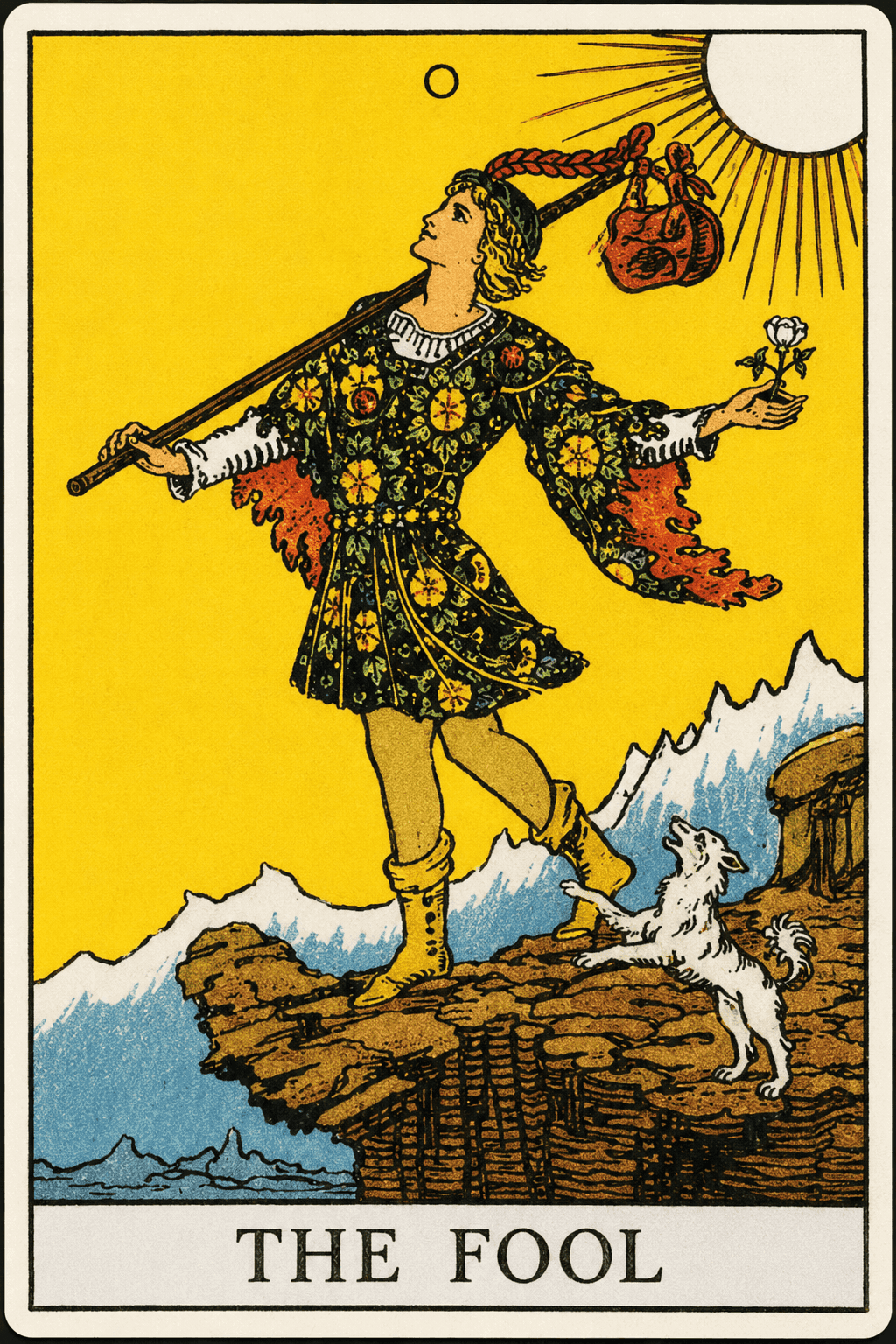
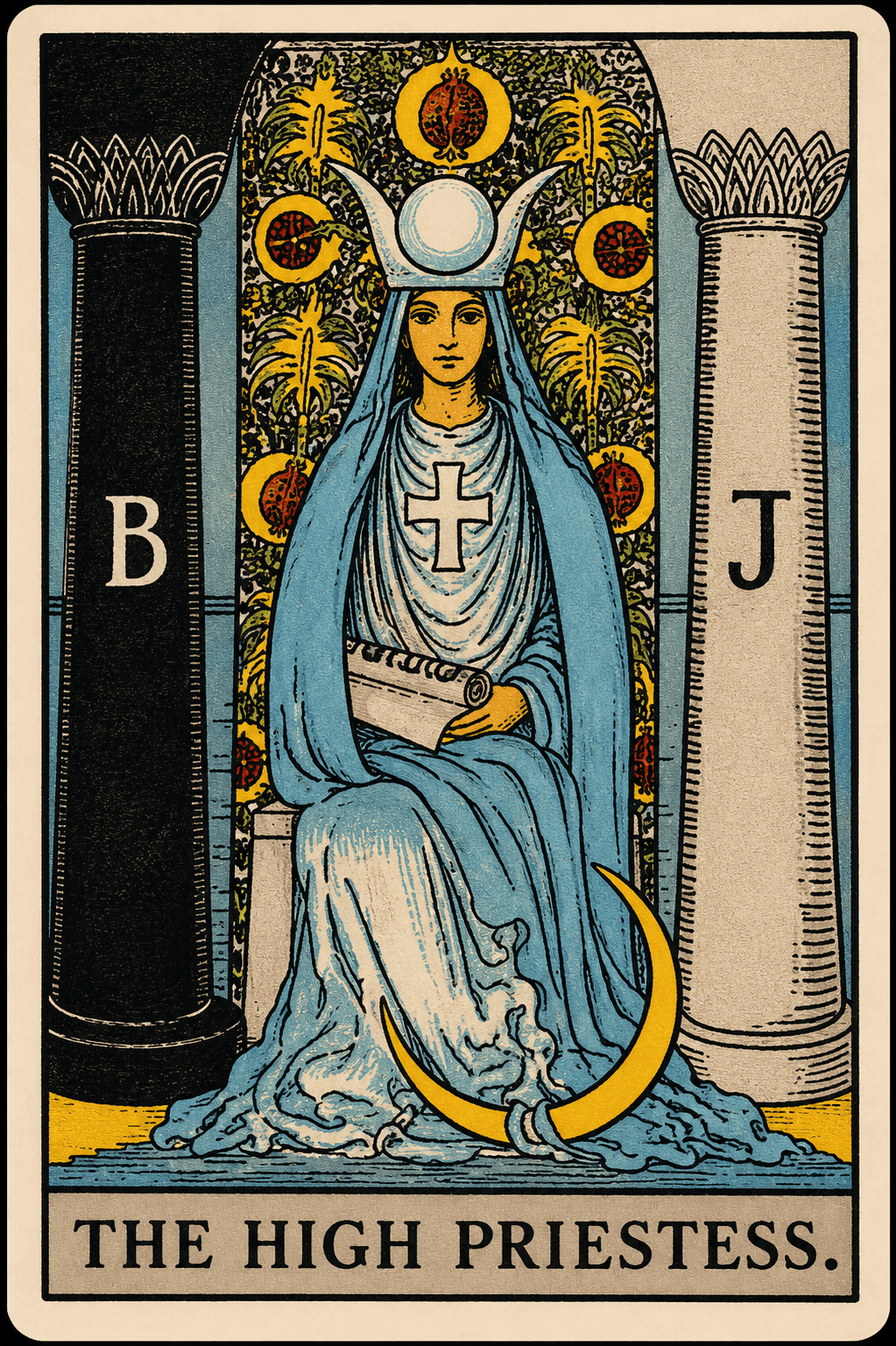
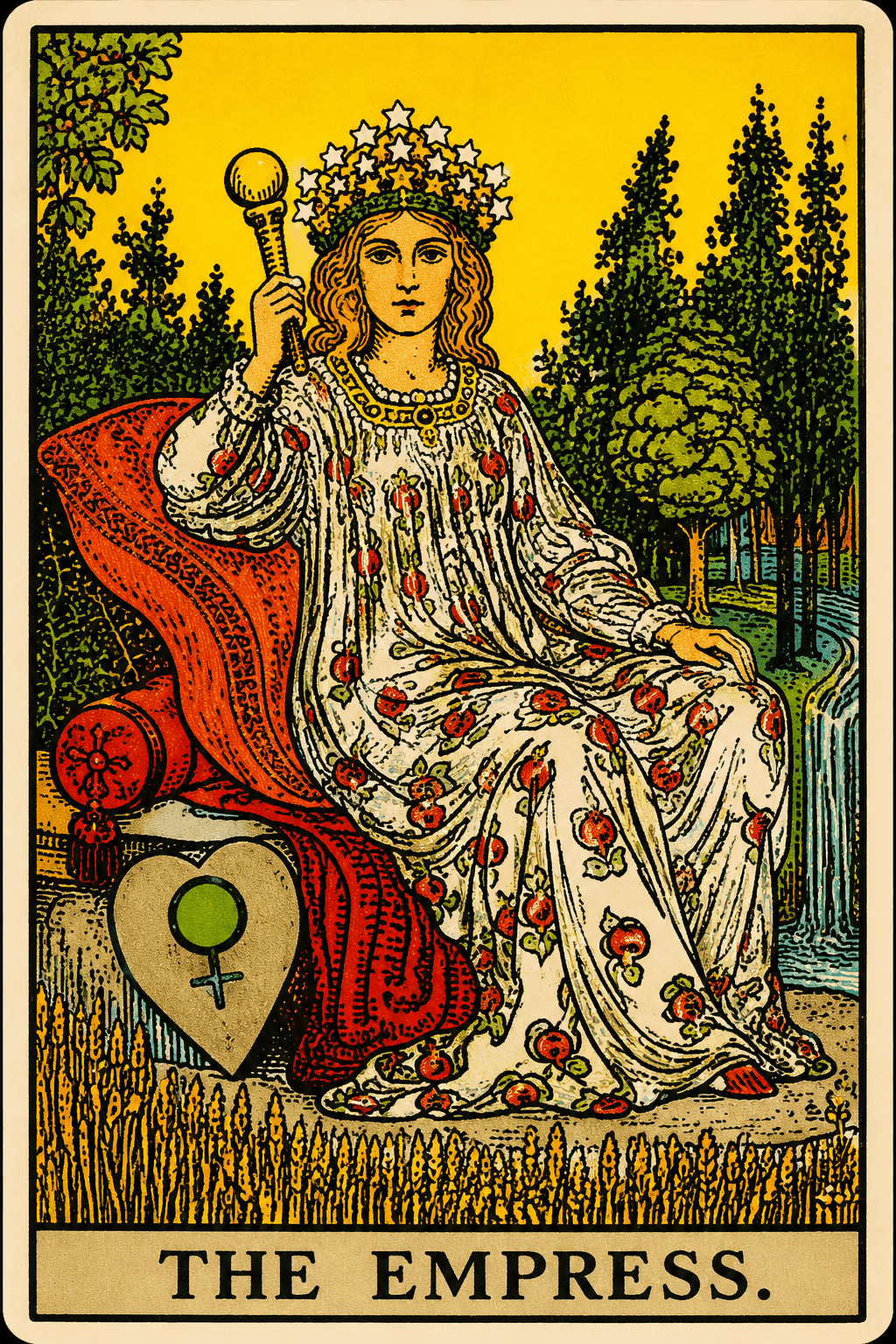
Start with the question, not the cards
Almost every beginner starts in the wrong place: with the cards, trying to memorize what each one 'means.' The cards are the easy part. The skill that actually makes a reading useful is asking a question worth answering, and that's the part no card list will teach you.
A good tarot question is open, present-tense, and about you. 'What am I not seeing about this situation?' works. 'What's the cost of staying where I am?' works. 'Will I get back together with my ex?' does not: not because tarot is shy about romance, but because it asks the cards to predict someone else's choices, which they can't do. Spend thirty seconds sharpening the question before you touch the deck and you've already done most of the work.
You don't need to memorize all 78 cards
The fear that stops most people is the idea that you have to learn seventy-eight meanings, upright and reversed, before you're allowed to read. You don't. Every card has a keyword or two at its center (The Tower is sudden change, the Two of Cups is connection, the Eight of Pentacles is patient work) and a keyword plus the image in front of you is enough to start.
Look at the card. Notice what your eye goes to first. Read the short meaning to anchor yourself, then ask what that meaning has to do with the actual situation you asked about. That last step is the whole craft, and it's why a reference you can glance at, like a card meanings page, beats rote memorization for a beginner. You're not reciting the card. You're using it as a prompt.
Lay out a simple spread
Start with one card. A single card, drawn against a clear question, is a complete reading and the best possible way to learn, there's nowhere to hide and nothing to overthink. Pull it, read it, write down the one thing it made you notice. Do that a dozen times and you'll have learned more than any book gives you.
When one card feels natural, add the three-card spread: past, present, future, or the version I prefer: situation, obstacle, advice. Resist the urge to jump to ten-card spreads early. More cards don't give you more insight when you're starting out; they give you more to misread and more ways to talk yourself in circles.
Read the cards together, not one at a time
The most common beginner mistake in a multi-card spread is reading each card as an isolated fact ('this one means X, this one means Y') and then stopping. A spread isn't a list. It's a sentence. The cards modify each other, and the reading lives in how they relate, not in any single meaning.
So after you've noted what each card is pointing at individually, force yourself to say the whole thing out loud as one story: 'The situation is X, the thing in the way is Y, and the advice is Z.' If that sentence doesn't quite make sense, you're not done reading, you're just done describing. Sit with the tension until the three cards say something coherent about your actual life.
What to do when you draw a blank
It happens to everyone: you look at the card, you know the keyword, and nothing connects. Don't panic and don't force a profound-sounding interpretation you don't believe. Instead, ask the card a plain question: 'If you were advice about this exact situation, what would you be telling me to do?' Concreteness usually breaks the freeze.
And if it still doesn't land, let it not land. Not every card lights up every time, and a beginner who's honest about that will get better far faster than one who manufactures meaning to avoid the awkward silence. Reading tarot well is mostly the willingness to say the obvious true thing the card surfaced, which, more often than not, is something you already half-knew before you drew it.