
Card Combination
Eight of Cups and Three of Swords
Eight of Cups and Three of Swords together describe leaving after being hurt. The Three of Swords supplies the reason; the Eight of Cups is the walk away from it. Together they mark a departure that is a response to pain rather than a freely made choice, which changes how the leaving feels afterwards.
How these two cards change each other
This is the part neither card’s own page can tell you — what each one does to the other when they land together.
The Three of Swords explains the Eight of Cups. An Eight of Cups alone is a departure from something adequate but insufficient, often with no drama attached. The Three of Swords supplies a specific injury, which makes this a very different kind of exit.
The Eight of Cups gives the Three of Swords a direction. Heartbreak on its own is static. Paired with the Eight, something is being done about it, and the pairing is more about the leaving than about the wound.
Together they raise a question neither card asks alone: whether you are walking toward something or only away. Departures made under injury tend to be the second, and the difference shows up months later rather than immediately.
Eight of Cups and Three of Swords in context
In love
A relationship being left because of specific hurt rather than gradual disillusionment. The pairing does not argue against going. What it flags is that leaving while the wound is fresh means the decision carries the wound with it, and the same pattern is easy to walk directly into next.
In work
Resigning after being treated badly. Legitimate, frequently correct, and worth doing with the distinction in mind: leaving a specific situation is different from leaving a field, and pain tends to blur the two.
In friendship and family
Withdrawing from a relationship after being hurt by it. The Eight of Cups is a quiet exit rather than a confrontation, which is often the right call and occasionally the avoidant one.
When one or both are reversed
Eight of Cups reversed, Three of Swords upright
The hurt is present and the leaving is not happening. Either staying is being chosen, or the departure is being contemplated indefinitely. Common, uncomfortable, and not stable in the long run.
Three of Swords reversed, Eight of Cups upright
Leaving with the wound largely healed. The healthier version by some distance, because the decision is being made from a settled position rather than an acute one.
Both reversed
Neither the pain nor the departure is active. Frequently describes a situation that has quietly resolved without a decision ever being made about it.
The common misreading
Often said: Eight of Cups and Three of Swords means you should leave immediately.
More accurately: The pairing describes a departure connected to an injury; it does not endorse the timing. Decisions made at the sharpest point of a hurt are the ones most often revisited, and the cards distinguish leaving a situation from leaving while unable to tell which part of it was the problem.
If you drew this, ask yourself
Am I walking toward something, or only away from this?
Eight of Cups and Three of Swords: frequently asked questions
What do Eight of Cups and Three of Swords mean together?
Leaving in response to being hurt. The Three of Swords supplies a specific injury and the Eight of Cups supplies the departure, so together they describe an exit driven by pain rather than freely chosen.
Does this pairing mean I should end the relationship?
It describes a departure already in motion rather than issuing advice. What it genuinely flags is timing: decisions made while a wound is acute are the ones most often reconsidered later.
Is Eight of Cups and Three of Swords a negative combination?
It is painful and often correct. Leaving something that hurt you is frequently the right outcome, and the pairing's contribution is the question of whether you know what you are walking toward.
What is the difference between this and Eight of Cups alone?
The Eight of Cups on its own describes leaving something adequate but not enough, usually without drama. The Three of Swords supplies a specific injury, which makes the departure a reaction rather than a considered choice.
Related pairings
All combinationsEight of Cups + The Fool
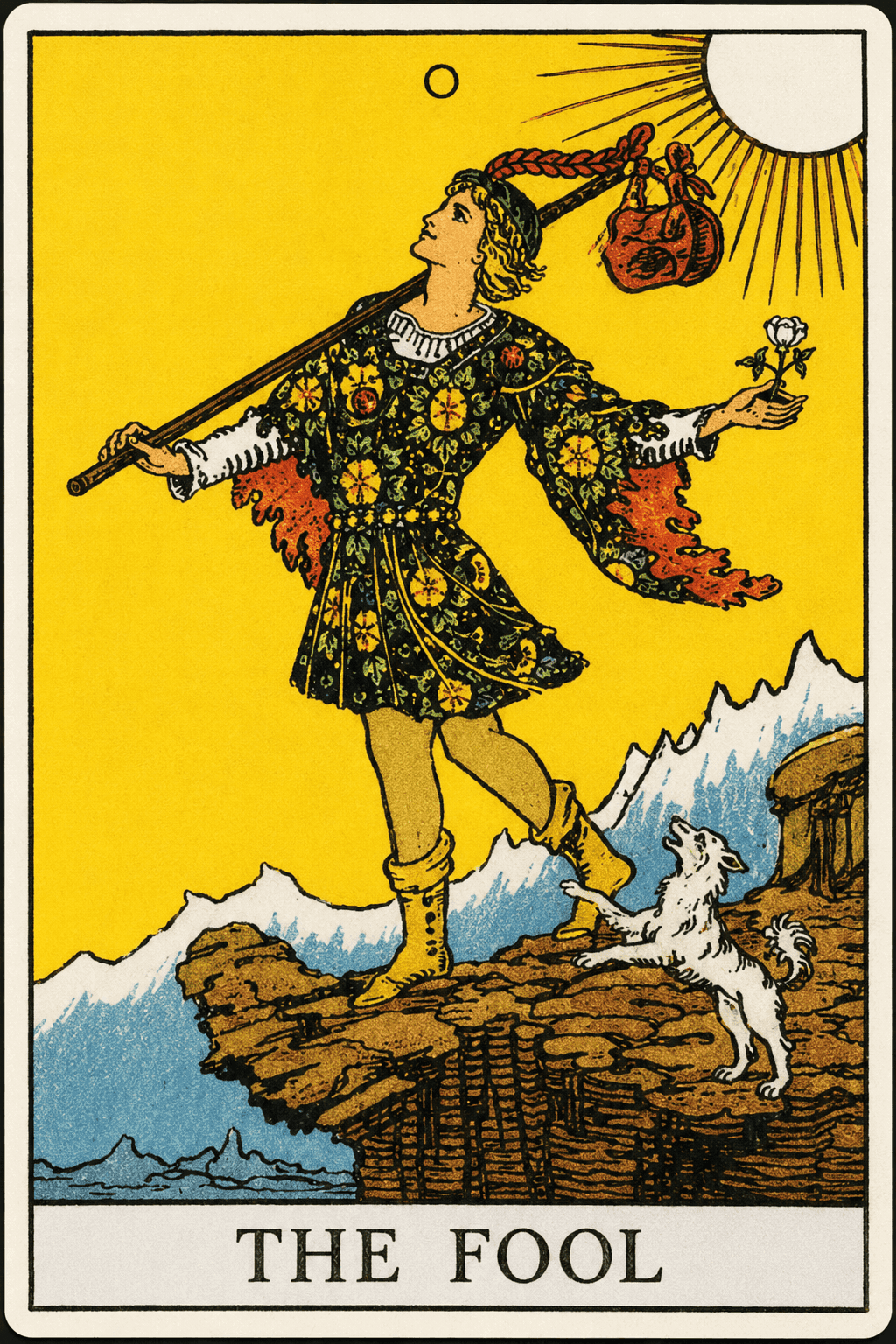
Leaving, and then beginning. The Eight of Cups is a deliberate walk away from something that was fine but not enough; The Fool is the step into what comes next without a map. Together they describe a departure that is genuinely chosen rather than forced, and the gap between the two, which is where most of the difficulty lives.
Five of Cups + Three of Swords
Loss, and the way of looking at it. The Three of Swords is the wound itself; the Five of Cups is standing over it with your back to what remains. Together they describe grief that is real and attention that has narrowed to only the grief.
Three of Swords + The Star
Heartbreak beginning to heal. The Three of Swords is sharp, honest grief; The Star is hope and renewal returning. Together they describe pain that is real but already softening: the worst of the hurt is passing, and quiet recovery is genuinely underway. A gentle, encouraging pairing after a hard chapter.
Draw your own
Combinations are most useful when they are your cards, in answer to your question.