Card Combination
Nine of Swords and The Moon
Nine of Swords and The Moon together describe anxiety meeting genuine uncertainty. The Nine of Swords is the dread that arrives at three in the morning and does its worst work alone. The Moon is the part of the situation that really is unclear. Together they describe how hard those two are to tell apart, and how the first fills the gaps left by the second.
How these two cards change each other
This is the part neither card’s own page can tell you — what each one does to the other when they land together.
The Moon explains where the Nine of Swords is getting its material. Anxiety needs a gap to work in, and The Moon supplies one: a genuinely unclear situation is exactly the condition under which dread becomes most persuasive.
The Nine of Swords warns against trusting your reading of The Moon. In an unclear situation the mind supplies a story, and a distressed mind supplies the worst available one. The pairing says the fog is real and the shape you have seen in it probably is not.
Read together they describe a loop rather than two states. Uncertainty produces anxiety, anxiety produces conclusions, conclusions get treated as information, and the uncertainty is now furnished with detail that was never in it.
Nine of Swords and The Moon in context
In relationships
Extremely common around silence: an unanswered message, a change in tone, a person who has gone quiet. The pairing's honest reading is that you do not know what is happening and that the version you have constructed at night is not evidence. It is a description of the state you are in more than of the other person.
In work
Job insecurity, an unexplained meeting, a decision being made without you. The Moon confirms that the situation genuinely is opaque, which is worth hearing, because a large part of work anxiety comes with a private suspicion that one is being irrational. Here you are not, and the specific conclusions are still unreliable.
In health and sleep
The Nine of Swords is the deck's most literal card about sleeplessness, and with The Moon the pairing frequently describes nights spent working over something that cannot be resolved by working it over. When these two appear in a wellbeing question, the reading is often simply and usefully about rest.
When one or both are reversed
Nine of Swords reversed
The anxiety easing while the situation is still unclear, which is the healthier of the two to resolve first. Uncertainty is survivable; uncertainty plus dread is what is not. This reversal usually marks a genuine improvement even though nothing external has changed.
The Moon reversed
Clarity arriving into a mind that is still braced for the worst. Common and worth naming: the facts turn out to be manageable and the anxiety takes a while to follow. The Nine upright says the physical state has not caught up with the information.
Both reversed
Fog lifting and dread receding together, the end of a difficult stretch. This is one of the more genuinely encouraging double reversals in the deck, precisely because both upright cards are so hard.
The common misreading
Often said: The Nine of Swords with The Moon confirms that your fears about the situation are justified.
More accurately: The pairing confirms that the situation is unclear, which is a different claim and nearly the opposite of a confirmation. The Moon says information is missing or distorted; the Nine of Swords says you are in distress. Neither card is evidence about the outcome, and treating them as corroboration is the specific error the combination is describing, anxiety reading its own presence as proof.
If you drew this, ask yourself
What do I actually know here, as opposed to what I have concluded, and could I write the two lists separately?
Nine of Swords and The Moon: frequently asked questions
What do the Nine of Swords and The Moon mean together?
Anxiety and genuine uncertainty appearing at once. The Nine of Swords is dread, often sleepless and worst when alone; The Moon is a situation that really is unclear. Together they describe how difficult the two are to separate, and how anxiety fills the gaps that uncertainty leaves.
Does this combination mean something bad is happening?
No. It describes a state rather than an outcome. The Moon indicates that information is missing or distorted, and the Nine of Swords indicates distress. Neither card is evidence about what will actually happen, which is the pairing's most useful point.
How do I tell anxiety from intuition here?
The pairing suggests a practical test: write what you know separately from what you have concluded. Intuition usually survives being written down in plain terms; anxiety tends to lose most of its material, because it was built from the gap rather than from evidence.
What does this combination mean about sleep?
Often something quite literal. The Nine of Swords is the deck's clearest card about sleeplessness, and with The Moon the reading frequently describes nights spent reworking something that cannot be resolved by reworking it. In a wellbeing question this pairing is usually about rest.
Related pairings
All combinationsThe Moon + The High Priestess
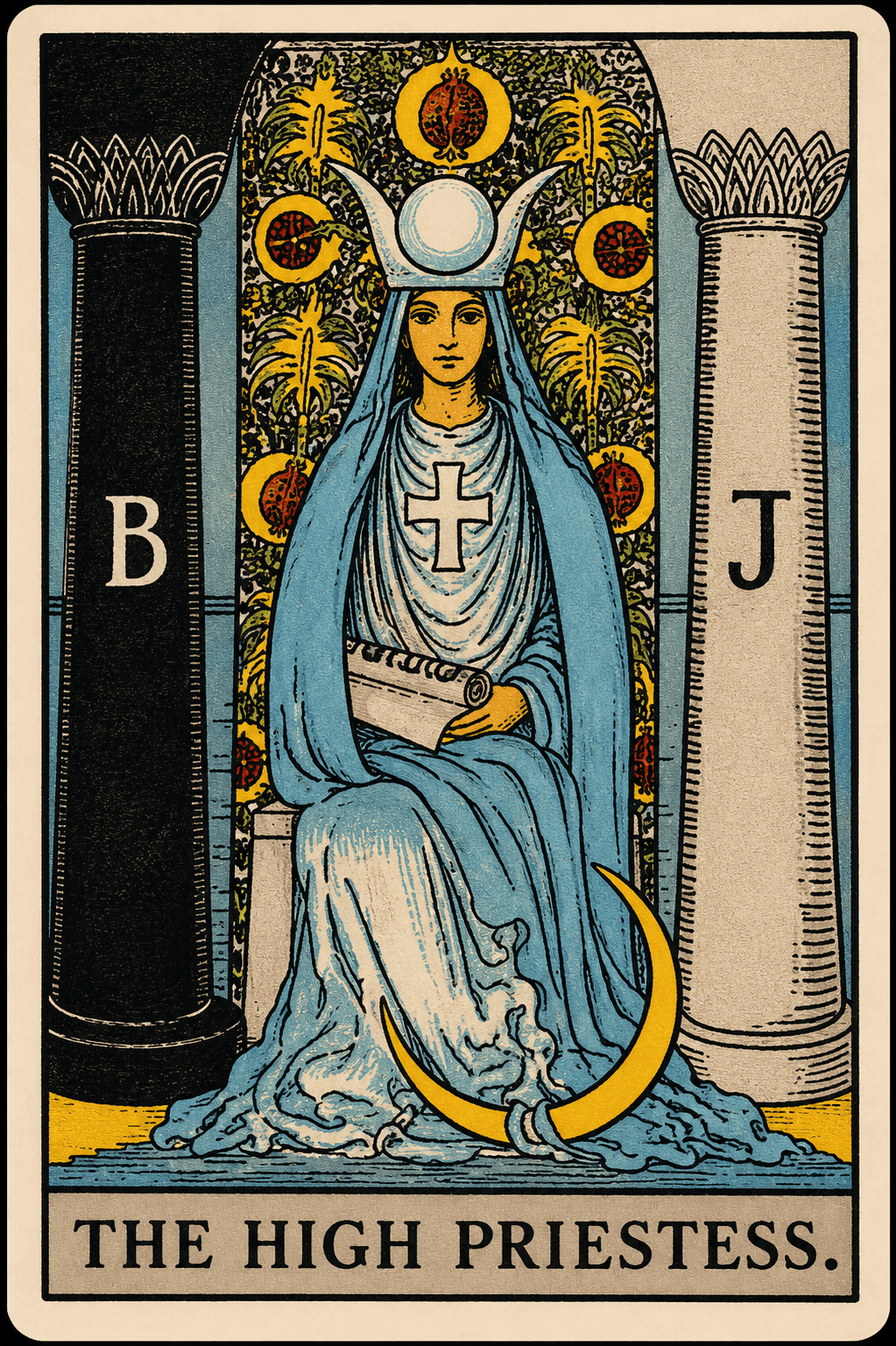
A deeply intuitive, mysterious pairing. Both cards point beneath the surface, the High Priestess to inner knowing still forming, the Moon to uncertainty and things not yet fully visible. Together they counsel patience and trust in your instincts: something significant is at work that can't yet be seen clearly. Don't force the clarity.
The Devil + Eight of Swords
A pairing about feeling trapped. The Devil points to attachment or a binding pattern; the Eight of Swords is restriction that's largely self-imposed by fear. Read together, they're less a sentence than a wake-up call: the constraint feels total but is looser than it seems. Naming what's really holding you is the first step free.
Three of Swords + The Star
Heartbreak beginning to heal. The Three of Swords is sharp, honest grief; The Star is hope and renewal returning. Together they describe pain that is real but already softening: the worst of the hurt is passing, and quiet recovery is genuinely underway. A gentle, encouraging pairing after a hard chapter.
Draw your own
Combinations are most useful when they are your cards, in answer to your question.