Tarot Glossary
The Rider-Waite-Smith Tarot
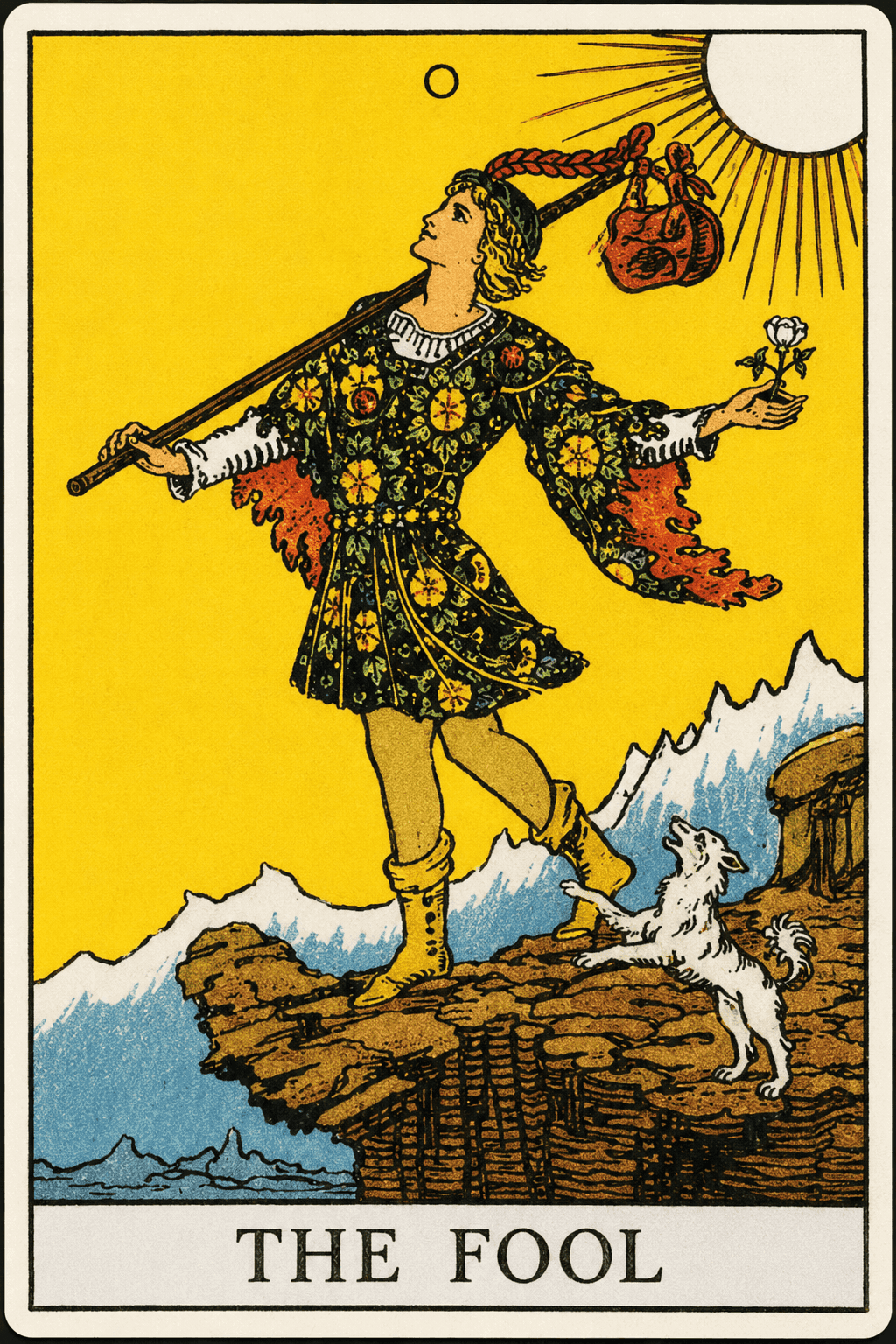
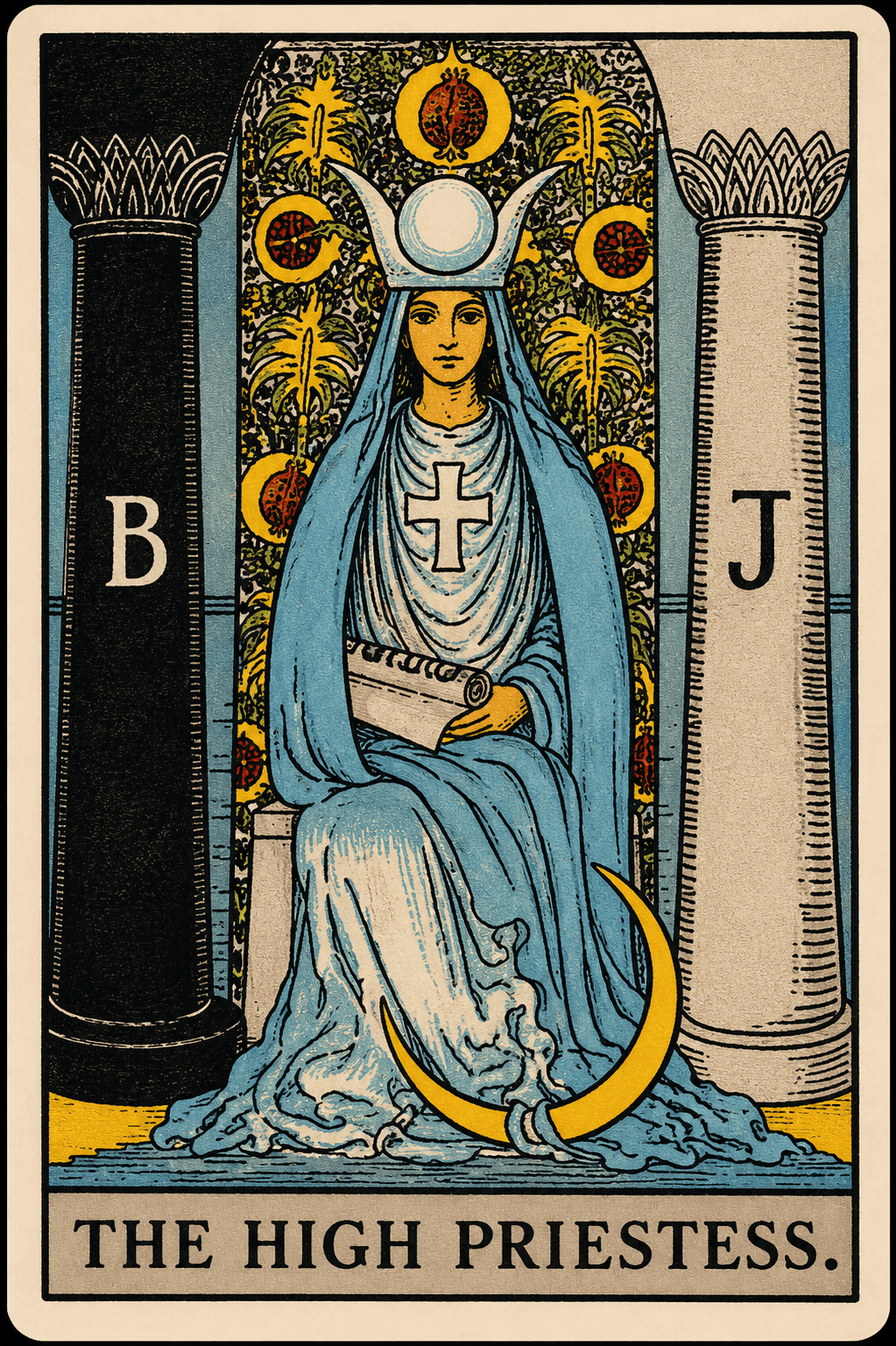
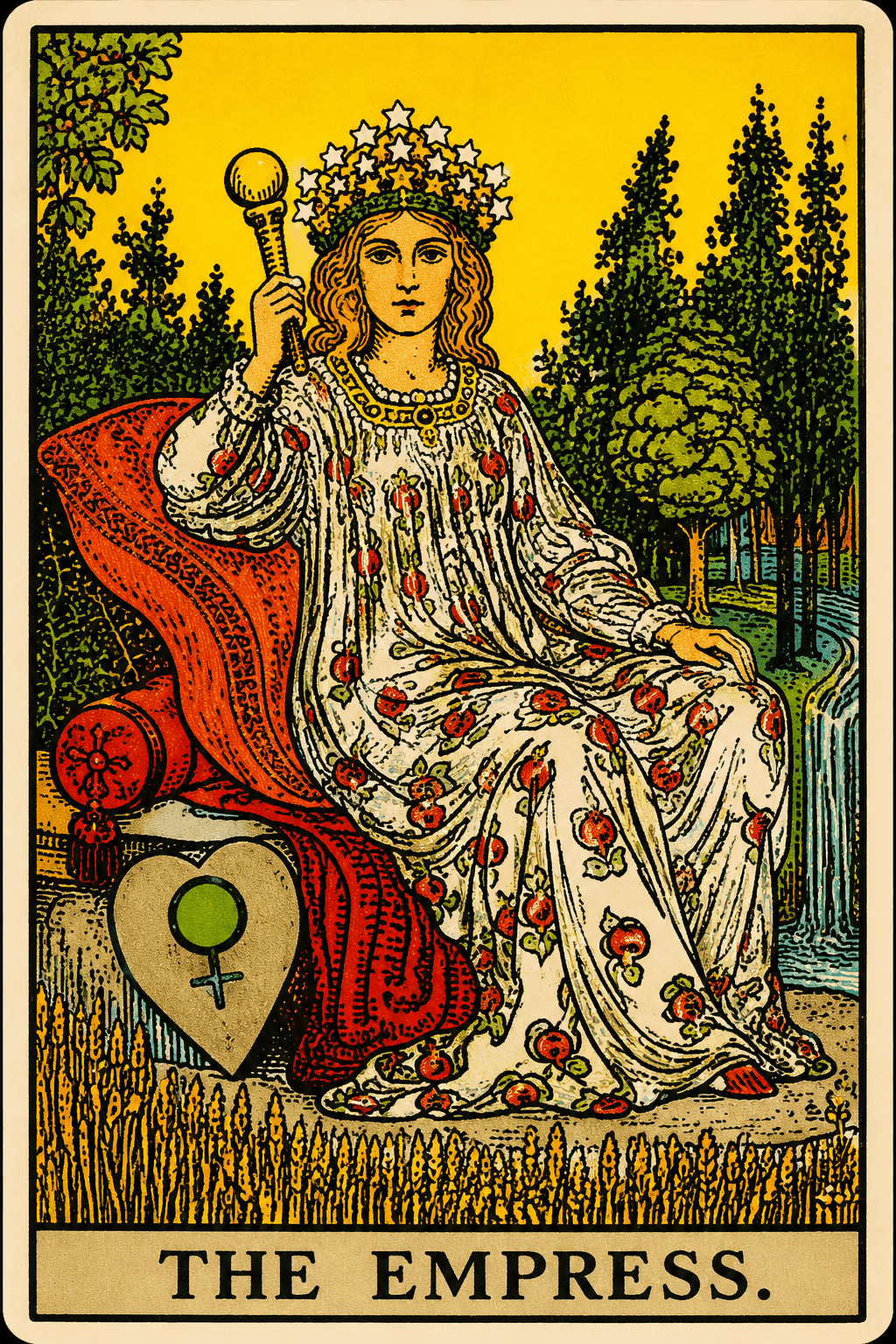
The Rider-Waite-Smith is the 78-card tarot deck published in 1909 by the Rider company, directed by Arthur Edward Waite and illustrated by Pamela Colman Smith. Its innovation was giving every Minor Arcana card a full narrative scene, which made the deck readable without memorisation and set the visual standard most modern decks still follow.
Who actually made it
Arthur Edward Waite specified the deck's structure and symbolism; Pamela Colman Smith drew all 78 cards, reportedly in under a year, for a flat fee and no royalties. For most of the twentieth century the deck was sold as the "Rider-Waite", crediting the publisher and the director but not the artist who made every image anyone actually recognises. "Rider-Waite-Smith" is the modern correction, and it is the name used throughout this site.
The innovation: illustrated minors
Before 1909, the Minor Arcana in most decks were pips: the Five of Cups showed five cups arranged on a card, in the way the five of hearts shows five hearts. Smith gave each of those 40 cards a scene with figures and action. The consequence is the reason the deck took over: you can read a card you have never studied, because the picture tells you something before you know what the card is called.
How it differs from a Marseille deck
The Tarot de Marseille, the dominant European pattern for centuries, keeps unillustrated pips. Reading it is a different discipline: you work from the card's number and its suit, combining an abstract quality with an arena of life, rather than interpreting a scene. Neither method is more legitimate. They are different instruments, and a meaning written for one does not transfer cleanly to the other.
Why this matters for anything you read online
Nearly every English-language card meaning published in the last century (in books, on sites, and in the interpretations on this one) describes Rider-Waite-Smith imagery. When a meaning for the Eight of Cups talks about a figure walking away from a stack of cups under a moon, it is describing Smith's drawing. If your deck shows something else, the meaning may not fit, and the deck's own book is the better guide.
The Rider-Waite-Smith Tarot in practice
- If you are learning from a modern book, app, or site, assume it is describing Rider-Waite-Smith imagery unless it says otherwise.
- Clone decks (Universal Waite, Radiant Rider-Waite, Smith-Waite Centennial) recolour or reprint the same 78 scenes, so every meaning transfers exactly.
- A quick test for whether a deck is in the RWS family: look at the Three of Swords. If it shows three swords through a heart, the meanings you find online will fit.
- If you own a Marseille or Thoth deck, read its own companion book rather than a general RWS-based guide: the Minor Arcana in particular will not line up.
The common misreading
Often said: The Rider-Waite-Smith is the original or the correct tarot deck.
More accurately: Tarot decks predate it by roughly 450 years: the earliest surviving examples are fifteenth-century Italian, and the Rider-Waite-Smith is a 1909 publication built on that inheritance. What makes it standard is influence, not primacy. Its illustrated minors were copied so widely that it became the shared vocabulary nearly all English-language tarot writing is composed against, which is a very different claim from being first or being right.
The Rider-Waite-Smith Tarot: frequently asked questions
What does Rider-Waite-Smith mean?
The three names are the publisher, the director, and the artist: Rider was the London publishing house, Arthur Edward Waite specified the deck's symbolism, and Pamela Colman Smith illustrated all 78 cards. The deck was long sold as the "Rider-Waite", omitting Smith; adding her name is a recent and widely adopted correction.
Is the Rider-Waite-Smith a good deck for beginners?
Yes, and for a specific reason rather than tradition: its Minor Arcana are illustrated with scenes, so a beginner can read a card by describing what is happening in it before knowing its assigned meaning. Almost every learning resource is also written against its imagery, so the deck and the material you learn from will agree.
What is the difference between Rider-Waite and Marseille tarot?
The Major Arcana are broadly comparable; the Minor Arcana are not. Marseille pips show arranged suit symbols with no scene, so they are read through number and suit. Rider-Waite-Smith minors show narrative scenes and are read through their imagery. The two require different methods, and meanings written for one do not transfer cleanly.
Who was Pamela Colman Smith?
Pamela Colman Smith (1878–1951) was an artist, illustrator, and theatrical designer who drew all 78 cards of the Rider-Waite-Smith deck. She was paid a flat fee with no royalties, went largely uncredited during her lifetime, and died in obscurity, despite having produced the most reproduced tarot artwork in existence.
Put it to use
The vocabulary is only worth much once you are reading with it.