The prediction frame breaks under its own weight
If tarot were actually predicting discrete future events, it would fail constantly and obviously: the same card would need to mean a promotion for one person and a breakup for another, drawn on the same afternoon. It does, all the time, and readers rarely notice, because that was never really the transaction happening.
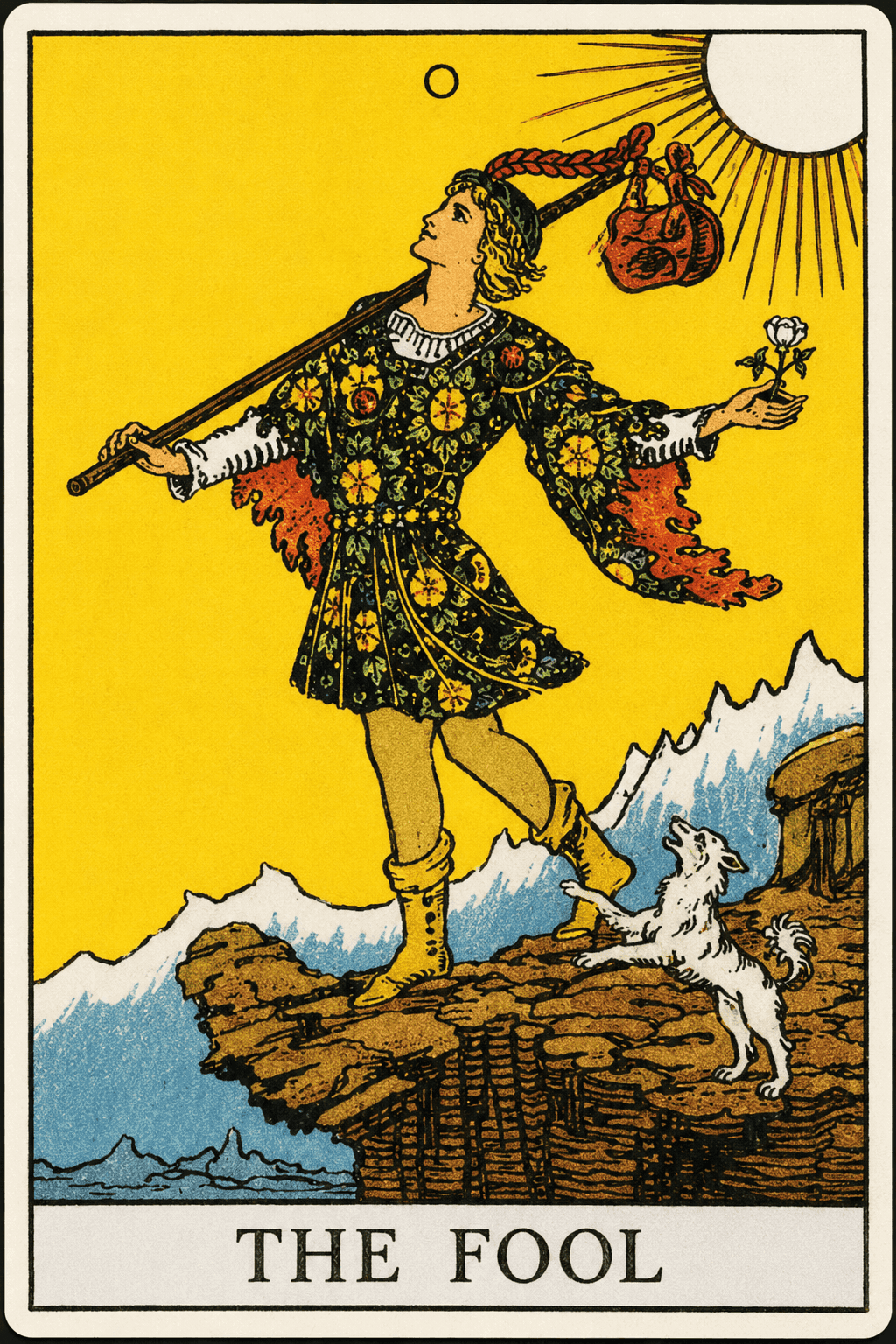
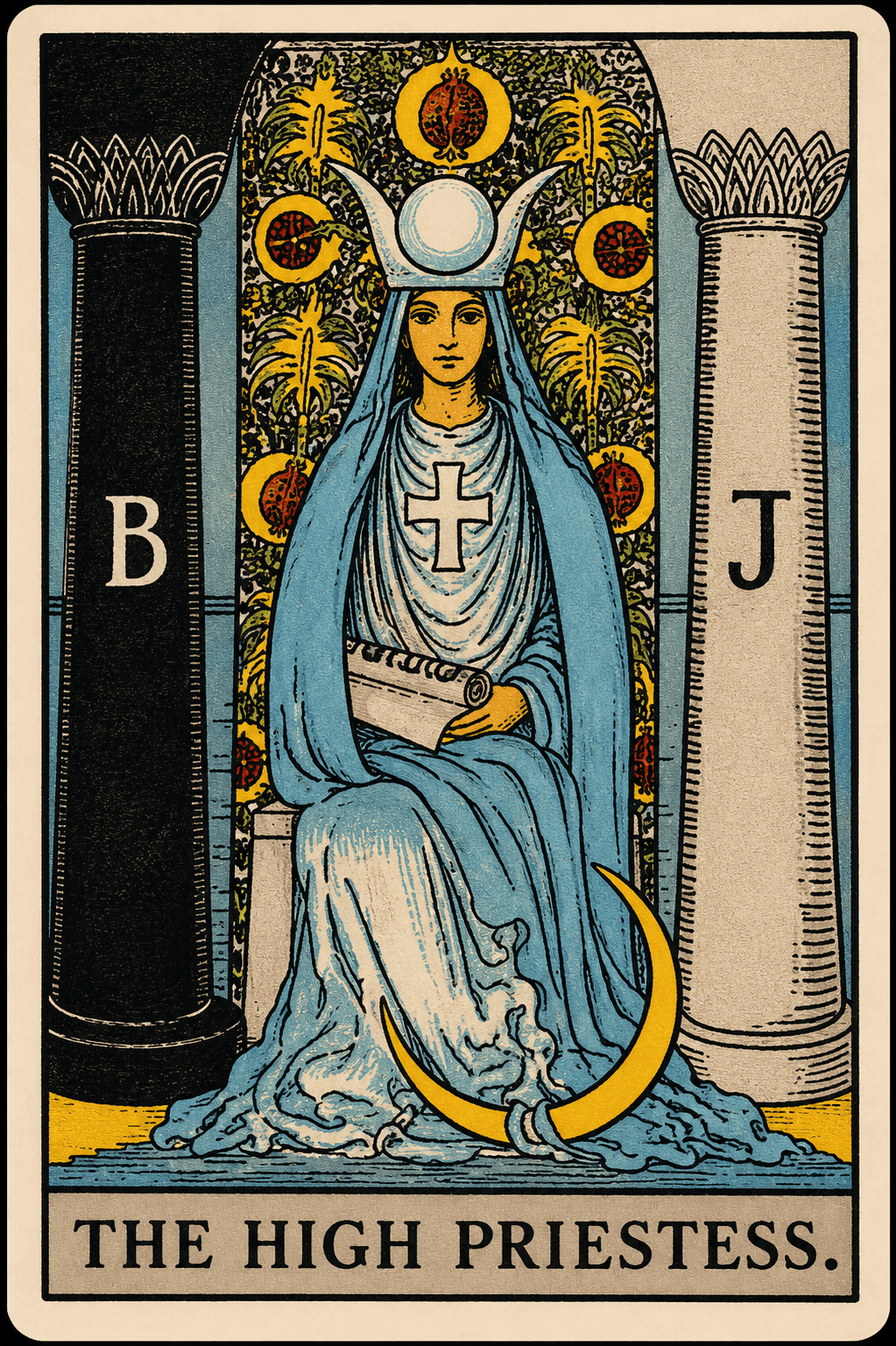
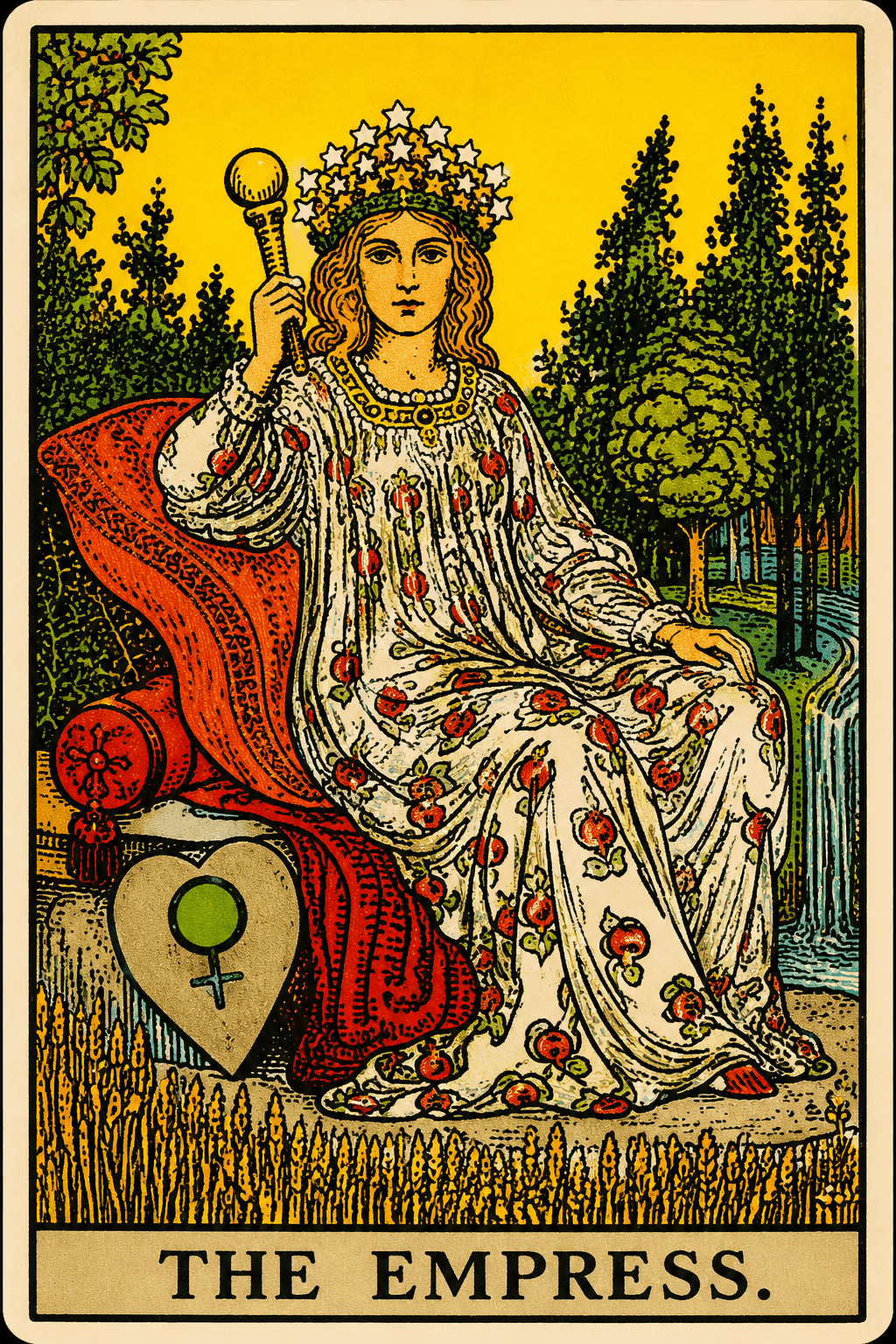
What's actually happening is closer to structured free association. Seventy-eight images, each dense with symbolism accumulated over centuries, get placed in front of a real situation you're already thinking about. Your mind does the rest, it reaches for the parts of the image that resonate and quietly discards the parts that don't. That's not a flaw in tarot. It's the entire mechanism, and it's worth being honest about.
What a mirror is actually good for
A mirror doesn't tell you anything you didn't already carry into the room. It just makes it visible enough to look at directly. That's a genuinely useful function: most of us are much better at noticing a pattern once it's externalized than while it's still just a feeling we haven't named.
This is why the most common reaction to a good reading isn't surprise, it's recognition, an almost-relieved 'yeah, that's exactly it.' You weren't told something new. You were handed a frame sturdy enough to hold something you already half-knew, so you could finally look straight at it.
The practical difference this makes
Once you drop the prediction frame, the questions you bring to a reading change for the better. 'Will I get the job?' has no honest answer tarot can give you. 'What am I not seeing about how I've been approaching this?' does, because that question is about you, and you're the one thing actually in the room.
It also changes what you do after the cards are drawn. A prediction asks you to wait and see. A mirror asks you to act: to take whatever became visible and do something with it before the moment passes. That's the whole practice, really: not fortune-telling, just a well-lit place to think out loud.
What the 78 cards are actually doing
A tarot deck is a fixed set of 78 images, and that fixedness is the whole mechanism. Twenty-two Major Arcana cover archetypal themes: beginnings, endings, upheaval, reckoning. Fifty-six Minor Arcana split into four suits that map onto the ordinary arenas of a life: drive, feeling, thought, and material circumstance. Between them the deck covers most of what a human situation can be about, at a level of abstraction general enough to apply and specific enough to bite.
When you draw a card, you are pulling one of those 78 frames at random and holding your situation against it. The randomness matters more than people expect. A frame you would never have chosen is exactly the frame most likely to show you something you had been routing around, because your own selection would have been shaped by what you already believed.
Why randomness is a feature rather than a flaw
The obvious objection to tarot is that the cards are random. That is true, and it is also the point. Structured randomness has a long history as a thinking tool outside tarot entirely: Brian Eno and Peter Schmidt's Oblique Strategies deck exists for the same reason, and so does the practice of arguing the opposite side of a position you hold. The value is not that the prompt knows something. It is that the prompt is not yours.
This is why a reading that produces recognition rather than surprise is working correctly. You brought the material; the card supplied an angle you would not have taken on your own. Nothing supernatural is required for that to be genuinely useful, which is fortunate, because nothing supernatural is on offer.
Where this leaves accuracy
Read as prediction, tarot has an accuracy problem it cannot solve: the same card would have to mean a promotion for one person and a redundancy for another on the same afternoon. Read as a reflective prompt, accuracy is not the relevant measure at all. The question becomes whether the reading gave you a usable angle on something you were already carrying, which is answerable, and which you can check yourself.
That is a narrower claim than most tarot writing makes. It is also the only claim that survives contact with how readings actually behave, and it is the one every interpretation on this site is written to.