Major and minor arcana, briefly
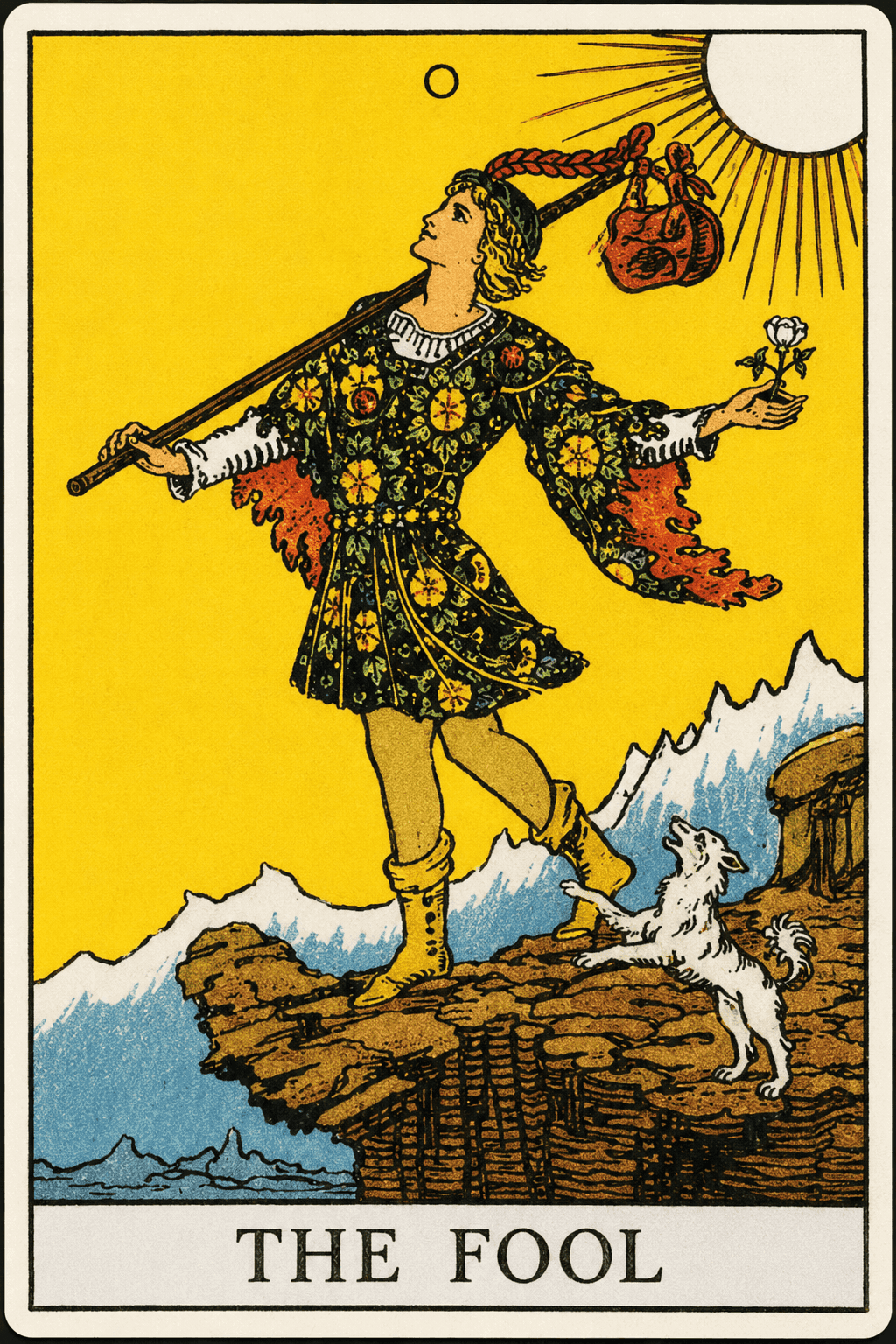
The 78-card tarot splits into two groups. The 22 Major Arcana (The Fool, The Tower, The Star and the rest) are the big, archetypal themes: the major forces and turning points of a life. The 56 Minor Arcana handle everyday texture, and they're organized into four suits of fourteen cards each, exactly like a deck of playing cards with an extra court card.
Here's the useful part: because the Minors are systematic, you don't have to memorize fifty-six separate meanings. If you know what each suit governs and what each number tends to signify, you can reconstruct most card meanings on sight. Learn the map and the territory mostly reads itself.
Wands: energy, drive, and creativity
Wands are the suit of fire: ambition, inspiration, momentum, and the spark of wanting to do something. When Wands dominate a reading, the theme is usually action, creativity, passion, or the energy you're bringing to a pursuit. They're the cards of getting started and pushing forward.
Read the numbers as a story of drive: the Ace is a spark of inspiration, the Three is momentum finding its footing, the Eight is fast movement, and the Ten is drive carried to the point of burden. When you draw a lot of Wands, the reading is asking about your energy and will: where it's flowing, where it's blocked, and whether you're pointing it at the right thing.
Cups: emotion and relationships
Cups are the suit of water: feelings, relationships, intuition, and the inner life. They govern love, friendship, grief, joy, and everything about how we connect. When Cups fill a spread, the situation is emotional at its core, whatever surface it wears.
The numbers trace an emotional arc: the Ace is an opening of the heart, the Two is mutual connection, the Three is celebration and community, and further along the suit moves through nostalgia, choice, and eventual fulfillment. The Cups are where love readings mostly live, and where the reading is usually less about facts than about what you feel and haven't yet said.
Swords: thought, conflict, and truth
Swords are the suit of air: the mind, communication, conflict, and hard truths. They're the most feared suit because several of their cards are genuinely uncomfortable, but that's the point: Swords name the mental and relational difficulties we'd rather not look at directly. They're about thought, decision, and the sharp edges of honesty.
The numbers move through struggle toward clarity: the Ace is a breakthrough of truth or a decision cutting clean, the middle cards move through conflict, anxiety, and feeling trapped, and the suit resolves toward a hard-won mental clarity. When Swords crowd a reading, the work is usually about how you're thinking: the stories you're telling yourself, the conversation you're avoiding, the truth you already know.
Pentacles: work, money, and the material world
Pentacles are the suit of earth: work, money, home, health, and everything tangible. They govern the practical and material side of life: your job, your resources, your body, the slow building of something real. When Pentacles lead a reading, the question is grounded in the physical world rather than the emotional or mental one.
Their numbers tell a story of patient building: the Ace is a material opportunity or seed, the Three is skilled collaboration, the Eight is diligent craft, and the Nine and Ten are stability and lasting security. Pentacles are where career and money readings mostly live: the suit of doing the unglamorous work and watching it, over time, add up to something solid.
Reading the suits as a balance
Once you know the four suits, one of the most useful things you can notice in any reading is which suits are present and which are missing. A spread heavy in Cups with no Pentacles might be all feeling and no grounding. One drowning in Swords with no Wands might be all analysis and no action. The absence is often as informative as the presence.
That's the real payoff of learning the suits: you stop reading fifty-six isolated cards and start reading four elements in conversation: fire, water, air, and earth, arguing and balancing across the table in front of you. Master the suits and the Minor Arcana turns from a memorization problem into a language you can actually speak.