
Card Combination
Ten of Swords and The Fool
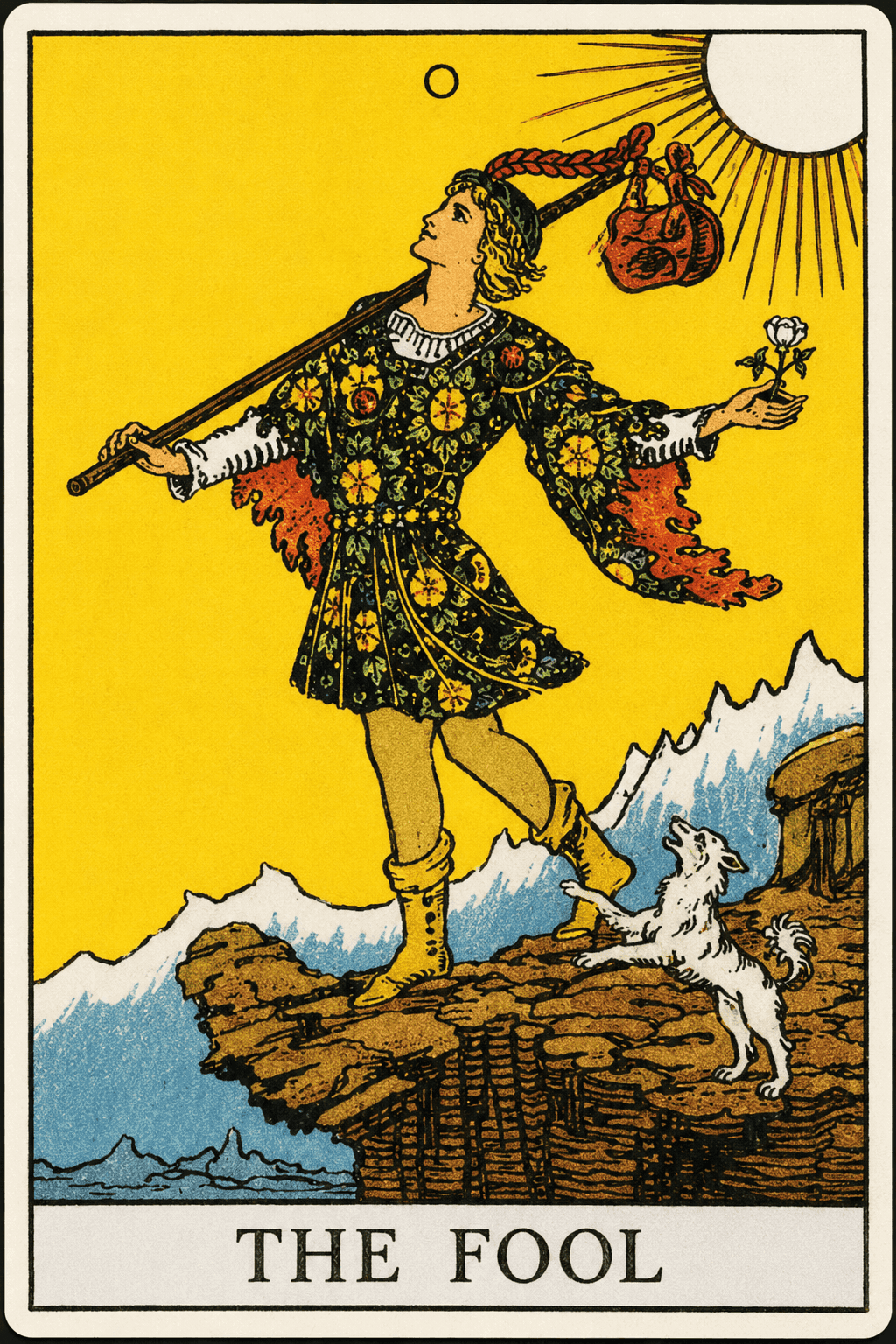
Ten of Swords and The Fool together describe the worst of something followed by a first step. The Ten of Swords is an ending with nothing left to lose; The Fool is beginning again without a plan. Together they describe the particular freedom that arrives once the bottom has already been reached.
How these two cards change each other
This is the part neither card’s own page can tell you — what each one does to the other when they land together.
The Fool changes what the Ten of Swords is for. The Ten alone is an ending presented as final, and it is genuinely bleak read in isolation. The Fool places it as a floor rather than a conclusion, which is a different card entirely in practice.
The Ten of Swords removes The Fool's recklessness. Stepping into the unknown reads as risky when there is something to protect. After the Ten of Swords there is not, which makes the same step a reasonable one rather than a gamble.
Together they describe a specific and underrated resource: having nothing left to lose. That is not a consolation, it is a real change in what is available to you, and it is what this pairing is actually about.
Ten of Swords and The Fool in context
After a collapse
A job lost, a relationship finished badly, a plan failing completely, with the first movement afterwards. The pairing does not minimise the Ten of Swords, and it declines to leave the reading there. The restart is genuine and does not require feeling ready.
In a decision
Where something has already ended, the useful reading is that protecting what remains is no longer a live consideration. Decisions get made cautiously out of habit long after the thing that required caution is gone.
In identity
The end of a version of yourself, and the beginning of one with no defined shape. Uncomfortable, and the discomfort is largely the absence of a script rather than anything being wrong.
When one or both are reversed
Ten of Swords reversed, The Fool upright
Recovery from the ending already underway with the new beginning in motion. One of the more encouraging configurations available: the worst is receding rather than arriving.
The Fool reversed, Ten of Swords upright
The ending has happened and no step is being taken. Stuck at the bottom, which is a normal stage and becomes a position if it lasts. The most common version of this pairing in practice.
Both reversed
Neither a decisive ending nor a beginning. Often describes something that has not finished cleanly enough to move on from, which is harder than a clear ending.
The common misreading
Often said: The Ten of Swords means total ruin and The Fool means starting over naively.
More accurately: Read separately both cards sound worse than the pairing is. The Ten of Swords is an ending that has already happened rather than a catastrophe approaching, and The Fool after it is not naivety but the ordinary act of moving when there is nothing left to guard. Together they are among the more hopeful sequences in the deck.
If you drew this, ask yourself
What am I still protecting that I no longer actually have?
Ten of Swords and The Fool: frequently asked questions
What do Ten of Swords and The Fool mean together?
An ending followed by a beginning. The Ten of Swords supplies the point where there is nothing left to lose and The Fool supplies the first step, so together they describe the freedom that follows having hit bottom.
Is Ten of Swords and The Fool a bad combination?
Less than it looks. The Ten of Swords describes something that has already happened rather than something approaching, and The Fool places it as a floor rather than a conclusion.
Does this pairing mean things will get better?
It indicates movement rather than a guaranteed improvement. What it establishes is that the ending is behind you and a step is available, which is different from a promise about where the step leads.
What if I do not feel ready to start again?
The Fool never describes feeling ready. Check its orientation: reversed alongside an upright Ten of Swords is the configuration for being stuck at the bottom, which is a stage rather than a permanent state.
Related pairings
All combinationsTen of Swords + The Sun
The deck's starkest before-and-after. The Ten of Swords is the bottom of something, stated without softening; The Sun is uncomplicated clarity and warmth. Together they say the worst part is behind rather than ahead: with the specific and important condition that the ending has to actually be finished first.
Ace of Pentacles + The Fool
A concrete opportunity and the nerve to take it. The Ace of Pentacles is a real, material offer; The Fool is the step without guarantees. Together they describe a beginning that is solid on paper and still requires you to jump.
The Fool + The World
The beginning and the end of the journey, side by side. The World marks a cycle completed with real accomplishment; The Fool is a fresh leap into the unknown. Together they signal a chapter genuinely finishing as a new one opens, a sign you're ready to begin again, carrying everything you've learned.
Draw your own
Combinations are most useful when they are your cards, in answer to your question.