Card Combination
The Fool and The Magician
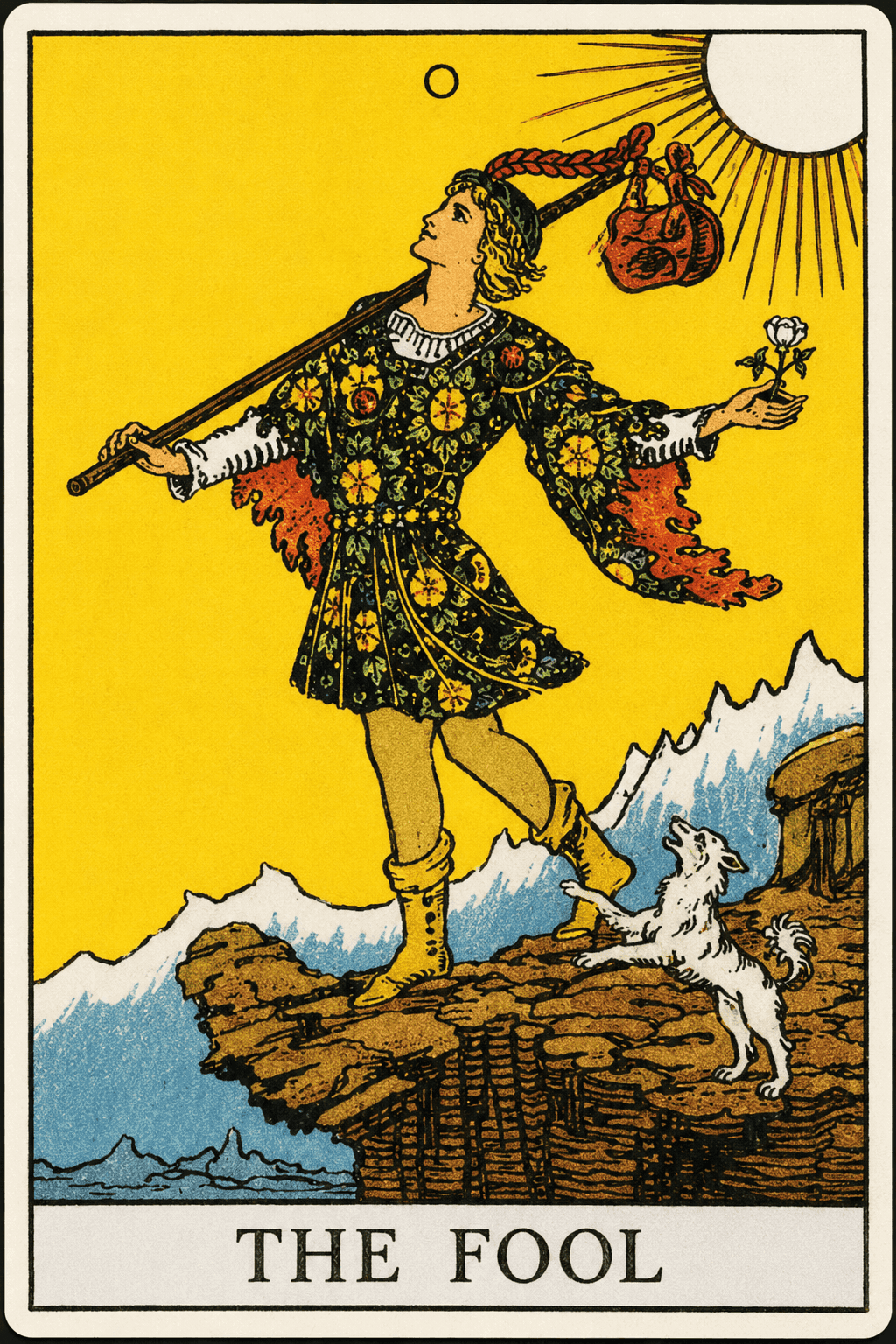
The Fool and The Magician together describe willingness and capability at the start of something. The Fool supplies the nerve to begin without a plan; The Magician supplies the tools to make it real. Together they describe a beginning with both appetite and competence behind it.
How these two cards change each other
This is the part neither card’s own page can tell you — what each one does to the other when they land together.
The Magician makes The Fool's leap less of a gamble. Beginning without a plan is characteristic of The Fool and usually costly. The Magician means the resources exist even if the route does not, which changes the risk considerably.
The Fool stops The Magician overthinking. Competence without willingness produces elaborate preparation and no start. The Fool is the part that actually moves, and it is the part capable people most often lack.
Together they describe the first two cards of the deck in order, which is not incidental. The sequence is the beginning of something and the ability to shape it, and it reads as a genuine start rather than a false one.
The Fool and The Magician in context
In starting something
About as favourable as beginnings get. Both cards are early and neither describes an obstacle, so the practical content is straightforward: the conditions are present and the missing element is the start itself.
In a decision
Favours acting over deliberating. Nothing in the pairing suggests waiting, and the combination of nerve and capability is not a permanent state to be drawn on later.
In identity
Frequently a genuine new chapter rather than a variation on the old one. The Fool has no history attached, and with The Magician there is enough capability for the new version to be built rather than merely imagined.
When one or both are reversed
The Fool reversed, The Magician upright
Capability with the nerve missing. Everything needed is present and the start is not happening, usually because the risk is being examined rather than taken.
The Magician reversed, The Fool upright
Willingness without the means. Genuine appetite meeting insufficient skill or resources, or capability being scattered. Enthusiasm alone will not carry this.
Both reversed
Neither nerve nor capability. A poor moment to begin, and generally about timing or depletion rather than about the idea.
The common misreading
Often said: The Fool means naivety, so this is a warning about acting rashly.
More accurately: The Fool describes beginning without a complete plan, which is the ordinary condition of every start, and The Magician beside it establishes that the capability is present. Reading it as a caution inverts the pairing and produces the one outcome it argues against, which is not starting.
If you drew this, ask yourself
What am I waiting to feel before I begin, and will waiting produce it?
The Fool and The Magician: frequently asked questions
What do The Fool and The Magician mean together?
Nerve and capability at a beginning. The Fool supplies willingness to start without a plan and The Magician supplies the tools to act, so together they describe a start with both appetite and competence.
Is The Fool and The Magician a good combination?
One of the more favourable beginnings in the deck. Neither card describes an obstacle, and the missing element is usually the start rather than any condition.
Does The Fool mean I am being naive?
No. It describes beginning without a complete plan, which is normal, and The Magician establishes the capability is there. Reading it as a warning inverts the pairing.
What if I have the ability but cannot start?
Check The Fool. Reversed alongside an upright Magician is exactly that: everything present except the willingness to take the risk.
Related pairings
All combinationsAce of Wands + The Magician
A spark and the ability to use it. The Ace of Wands is raw energy and a genuine impulse; The Magician supplies the skill and focus to turn it into something. Together they describe an idea arriving in the hands of someone able to act on it.
The Fool + The World
The beginning and the end of the journey, side by side. The World marks a cycle completed with real accomplishment; The Fool is a fresh leap into the unknown. Together they signal a chapter genuinely finishing as a new one opens, a sign you're ready to begin again, carrying everything you've learned.
Eight of Cups + The Fool
Leaving, and then beginning. The Eight of Cups is a deliberate walk away from something that was fine but not enough; The Fool is the step into what comes next without a map. Together they describe a departure that is genuinely chosen rather than forced, and the gap between the two, which is where most of the difficulty lives.
Draw your own
Combinations are most useful when they are your cards, in answer to your question.