
Tarot Glossary
The Fool's Journey
The Fool's Journey is a way of reading the 22 Major Arcana as a single narrative, running from The Fool at 0 to The World at 21. Each card marks a stage of development (innocence, willpower, upheaval, integration) and the sequence gives a learner a structure for holding the Majors as one story rather than as 22 unrelated symbols.
Where the idea comes from
The Fool's Journey is not medieval doctrine and was not part of tarot's original design. It is a twentieth-century teaching device, popularised largely through Eden Gray's writing in the 1960s and 70s and repeated by almost every introductory book since. That does not make it worthless. It makes it a good pedagogical frame with no claim to being the cards' true hidden order.
The three acts
The sequence divides naturally into three groups of seven, which is the fastest way to hold it in mind. Cards 1 through 7 deal with establishing a self in the world of other people: will, intuition, nurture, authority, tradition, relationship, and drive. Cards 8 through 14 turn inward through trial: strength, withdrawal, chance, justice, surrender, ending, and balance. Cards 15 through 21 move through what the first two acts could not resolve: bondage, collapse, hope, illusion, clarity, reckoning, and completion.
What it is good for
As a memory structure it is excellent. Twenty-two cards learned as a story stay learned in a way twenty-two flashcards do not, and the neighbours give you a handhold: if you can place a card in the sequence you can usually recover its sense. It also explains why certain cards feel like they belong together: The Tower and The Star read very differently once you know one follows the other.
What it is not good for
The Journey is not a claim about how readings work. Drawing The Hermit does not mean you have completed the eight cards before it, and drawing The World does not mean a cycle has finished on schedule. Cards arrive in the order they arrive. Treating the sequence as a progress bar is the single most common way this frame gets misused, and it turns a learning aid into a source of unearned anxiety about being "behind".
The Fool's Journey in order
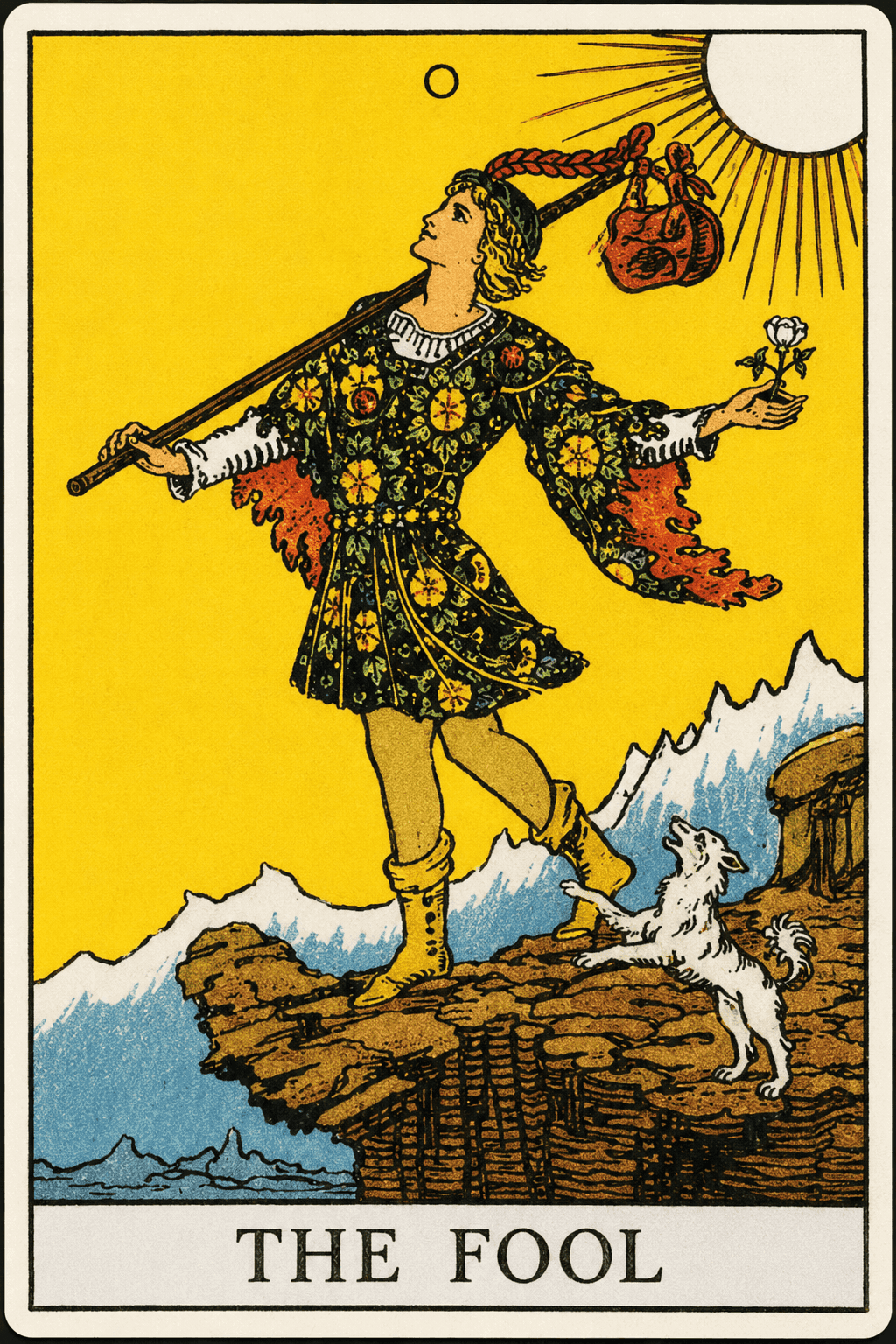
0, The Fool
The beginning: unformed potential, stepping off without a map.
1, The Magician
Discovering you have tools and the will to use them.
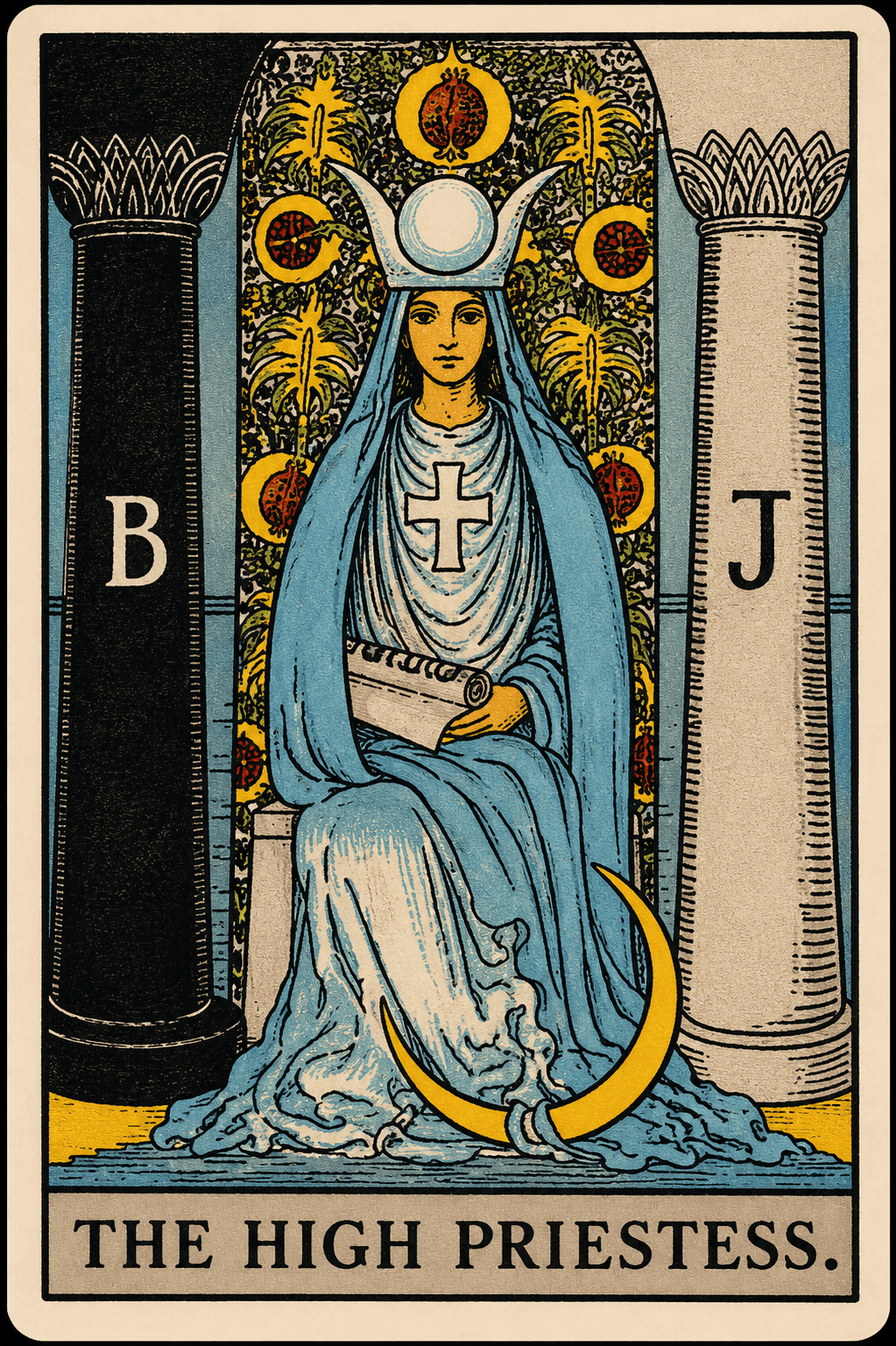
2, The High Priestess
Learning there is knowledge that is not spoken aloud.
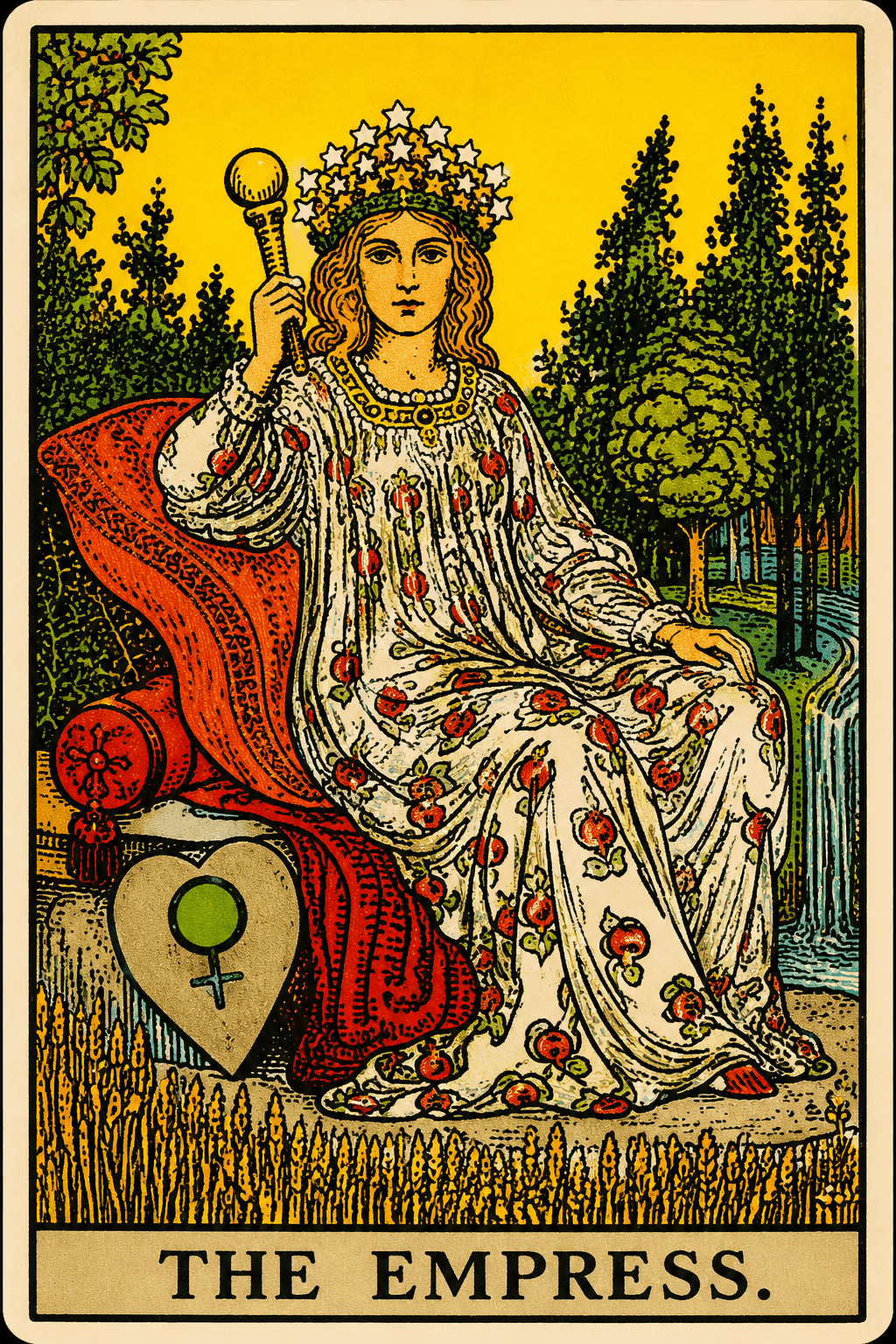
3, The Empress
Encountering abundance, care, and the world as something that gives.
4, The Emperor
Encountering structure, limit, and the world as something with rules.
5, The Hierophant
Meeting inherited tradition and the question of whether to accept it.
6, The Lovers
The first real choice, and the discovery that choosing means giving something up.
7, The Chariot
Taking control and driving forward on willpower alone.
8, Strength
Learning that force has a limit and patience goes further.
9, The Hermit
Withdrawing to look for an answer that other people cannot supply.
10, Wheel of Fortune
Meeting chance, and what is genuinely outside your control.
11, Justice
Facing consequence, and the accounting of what you have actually done.
12, The Hanged Man
Voluntary suspension: waiting, and seeing it differently from there.
13, Death
An ending that is not optional, and the clearing it leaves.
14, Temperance
Recombining what is left into something workable.
15, The Devil
Recognising a bond you are partly maintaining yourself.
16, The Tower
The structure built on that bond collapsing, fast.
17, The Star
Quiet hope afterwards, and the slow beginning of repair.
18, The Moon
Moving through what is unclear, distorted, or half-remembered.
19, The Sun
Clarity, warmth, and being seen plainly.
20, Judgement
A reckoning and a call: understanding the whole of it and answering.
21, The World
Completion, integration, and the ground for a new Fool to step off.
The Fool's Journey in practice
- Learn the Majors in three groups of seven rather than as one run of 22: the acts are far easier to hold than the full sequence.
- When a Major arrives and you cannot recall its meaning, place it in the sequence first; the cards on either side will usually recover the sense.
- Read The Tower and The Star as neighbours. Almost everything people find confusing about The Star makes sense once you know what precedes it.
- Do not tell a querent which stage they are "at". The sequence describes the deck's structure, not a person's position in their life.
The common misreading
Often said: Drawing a Major Arcana card tells you which stage of the Fool's Journey you are currently in.
More accurately: The Journey orders the deck, not the querent. Cards are drawn at random, so the Majors that appear reflect the shuffle and the question rather than a position on a developmental track. Reading The Hermit as "you are at stage nine" imports a linear progress claim the cards never made, and it reliably produces the least useful version of the reading: one about where you should be rather than what is actually in front of you.
The Fool's Journey: frequently asked questions
What is the Fool's Journey in tarot?
The Fool's Journey reads the 22 Major Arcana as one continuous story, from The Fool at 0 to The World at 21, with each card marking a stage of development. It is used mainly as a way of learning the Majors as a connected narrative rather than as 22 separate symbols to memorise.
Is the Fool's Journey historically accurate?
No. It is a twentieth-century teaching device, popularised largely by Eden Gray, rather than part of tarot's original design, the earliest decks carried no such narrative. It remains a genuinely useful learning frame, but it should not be presented as the cards' original or hidden meaning.
What order do the Major Arcana go in?
The Fool (0), The Magician, The High Priestess, The Empress, The Emperor, The Hierophant, The Lovers, The Chariot, Strength, The Hermit, Wheel of Fortune, Justice, The Hanged Man, Death, Temperance, The Devil, The Tower, The Star, The Moon, The Sun, Judgement, and The World (21).
Is The Fool card 0 or 22?
Usually 0, placed at the start, which is what makes the sequence a journey the Fool takes. Some traditions place it at the end as 22, or outside the numbering altogether, on the grounds that the Fool is the one who moves through the other cards rather than a stage among them. All three placements are in use.
Put it to use
The vocabulary is only worth much once you are reading with it.