
Why the order matters
The twenty-two Major Arcana are numbered, and the numbering is not decoration. Laid out from the Fool at zero to the World at twenty-one, they read as one arc: a figure who knows nothing sets out, meets every kind of teacher and test, falls apart, and comes back whole. Tarot writers have called that arc the Fool's Journey since the mid-twentieth century, and it is the single most useful way to hold the Majors in your head, because a story is far easier to remember than a list.
It is a reading frame, not a historical fact. The earliest decks did not come with this narrative attached. But the sequence was designed to move from the worldly to the cosmic, and the journey reading makes that movement legible. Use it as scaffolding.
Zero: the Fool sets out
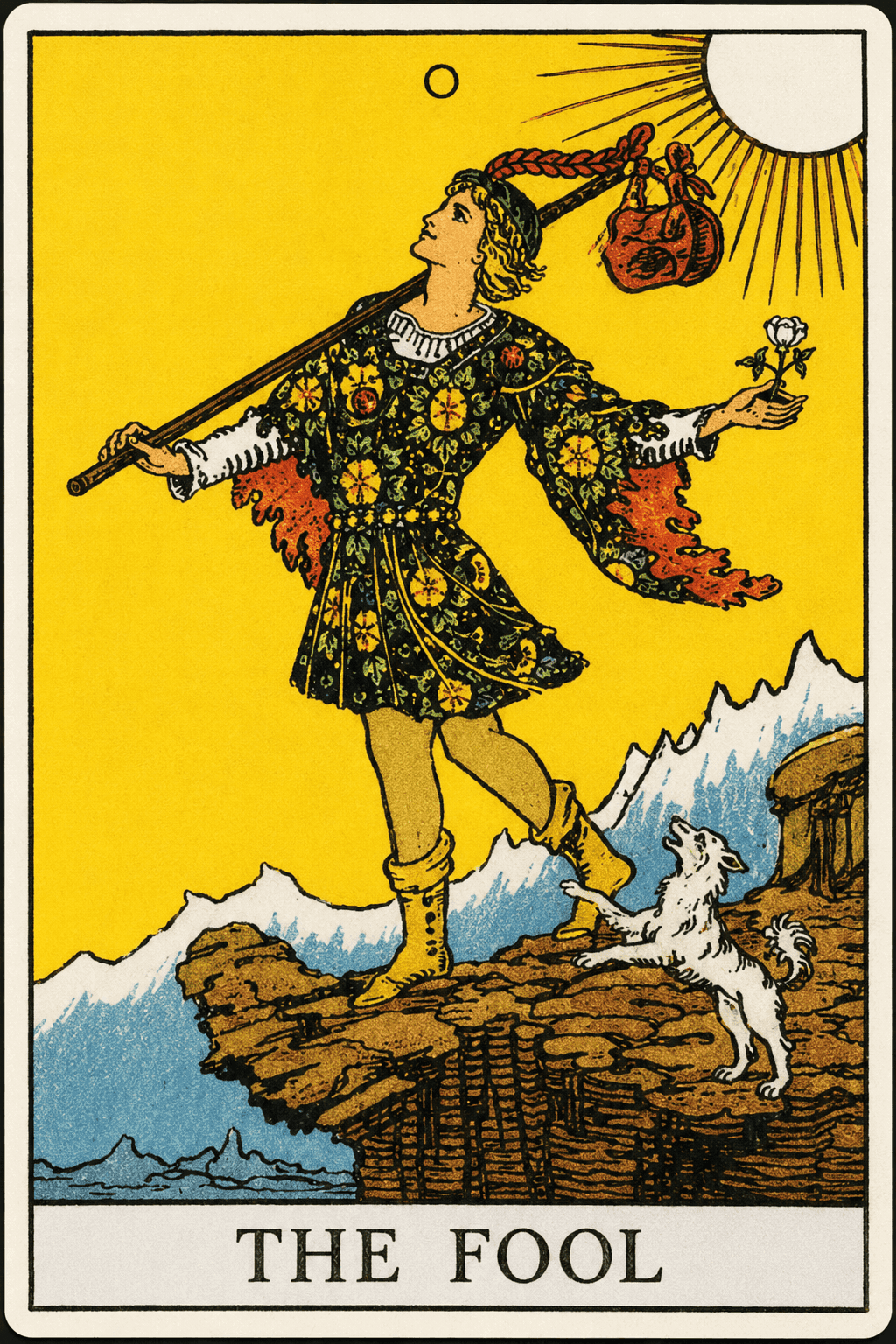
The Fool is numbered zero because he is not yet anything. He stands at the cliff edge with a small bag and a dog at his heels, looking up rather than down. He is potential without experience: every beginning, every leap, every moment where the sensible thing is to wait and you go anyway. Everything that follows is what happens to him.
One to seven: learning the world
The first row is about the outer world and the figures who teach him how to live in it.
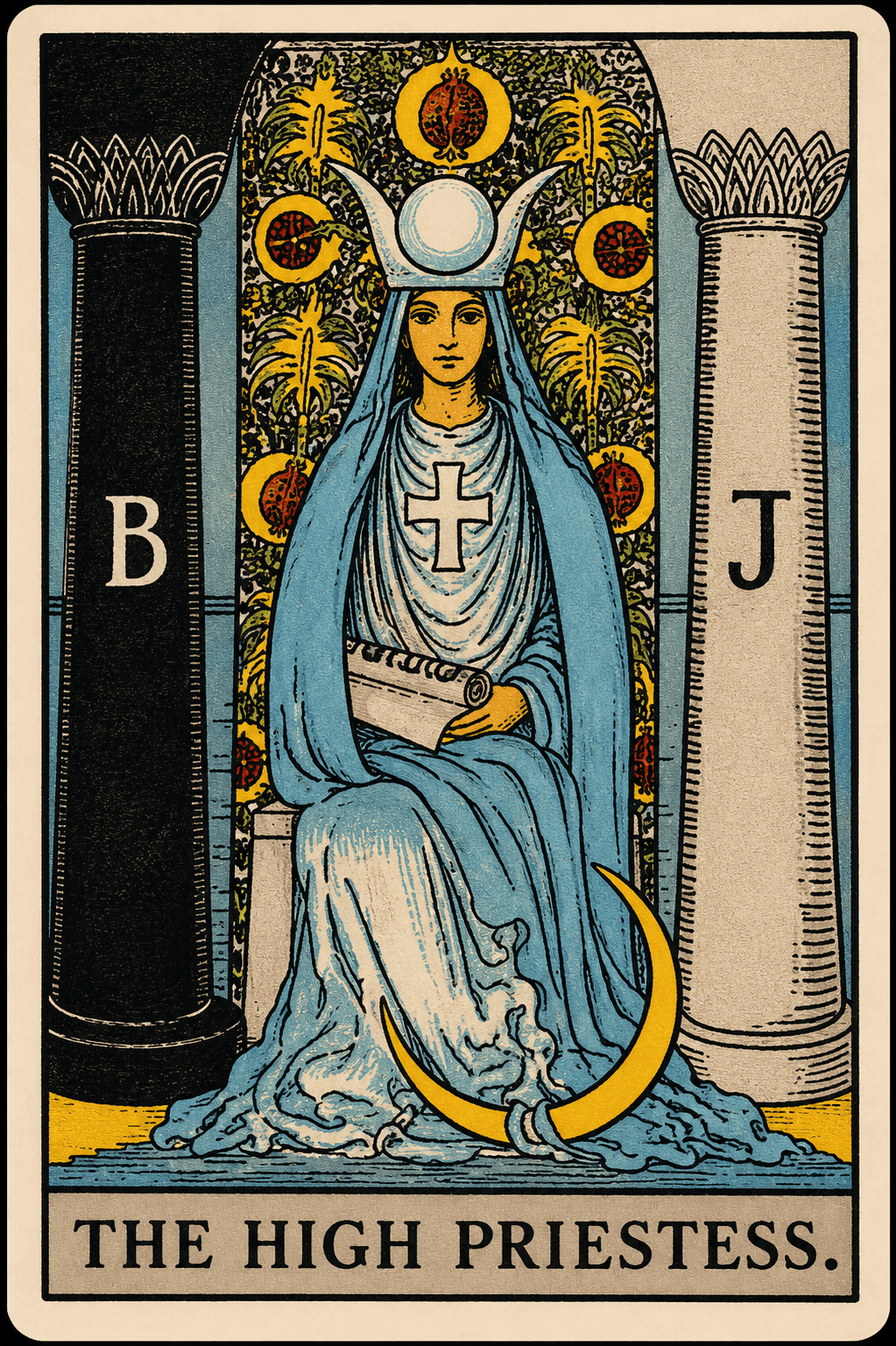
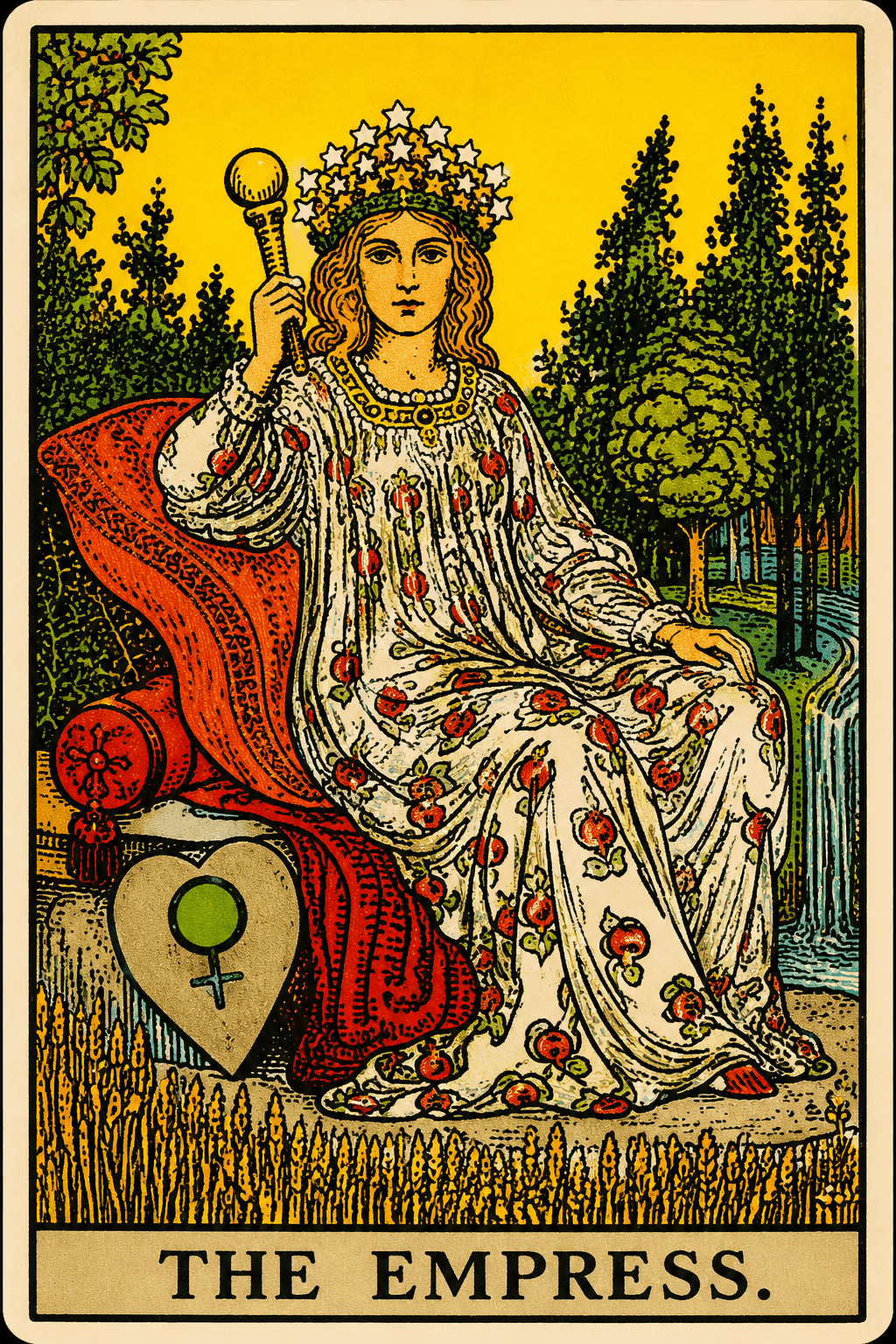
The Magician (I) shows him that he has tools and that will can shape things. The High Priestess (II) shows him what will cannot reach: intuition, silence, what is known without being said. The Empress (III) is abundance, nurture, the body, the created world. The Emperor (IV) is structure, law, and the authority that makes a world stable enough to live in.
Next, the Hierophant (V) hands him tradition: the received wisdom of institutions and teachers. The Lovers (VI) puts him in front of a real choice and a real other person, and asks what he values. The Chariot (VII) is the first row's graduation: he has learned enough to harness opposing forces and drive. He has a will, a direction, and momentum. He thinks he is done.
Eight to fourteen: meeting himself
The second row turns inward. The world has been learned; now the self has to be.
Strength (VIII) shows that the lion is not tamed by force but by patience, and that the first thing to master is one's own appetite. The Hermit (IX) withdraws to look for what the crowd cannot teach. The Wheel of Fortune (X) is the lesson that some things turn without you: luck, cycles, timing. Justice (XI) weighs what he has done so far and hands him the consequences.
The Hanged Man (XII) is the surrender the Chariot could not have imagined: seeing everything differently by giving up the fight. Death (XIII) ends what has run its course. Temperance (XIV) is the row's graduation: the blending of opposites into something new and steady. He is no longer driving. He is flowing.
Fifteen to twenty-one: the larger pattern
The third row is where the Journey stops being personal.
The Devil (XV) shows him what still binds him: the chains are loose, and he has not noticed. The Tower (XVI) knocks down whatever was built on that. The Star (XVII) is what remains after the fall: hope, and a clear sky. The Moon (XVIII) is the long walk through uncertainty, where nothing is quite what it seems. The Sun (XIX) is clarity and joy, plain and undeserved.
Judgement (XX) is the call to rise and answer for the whole journey. The World (XXI) is completion: the dancer inside the wreath, everything integrated, ready to begin again. Which is why the Fool follows it. The sequence is a circle.
How to use the sequence in a real reading
The journey frame gives every Major a neighbourhood. When the Tower appears, you know the Star follows: the card carries its own aftermath. When Strength appears, you know it comes after the Chariot: the situation has moved past what force can do. The number tells you where in the arc you are standing.
It also gives you a rough gauge of scale. A reading heavy in the first row is about circumstances and other people. One heavy in the second is about inner work. One heavy in the third is about something larger than the immediate problem. That is not a rule, but it is a good first question when a spread has several Majors in it.
Finally, it makes the deck memorable. Twenty-two names are hard. One story with twenty-two scenes is not. Tell it to yourself once with the cards laid out in three rows of seven with the Fool above, and you will find you no longer need the book for the Majors.