Tarot Card Library
Death
Death tarot card meaning: upright & reversed interpretations, plus love, career & yes-or-no guidance. Keywords: transformation, release, transition.
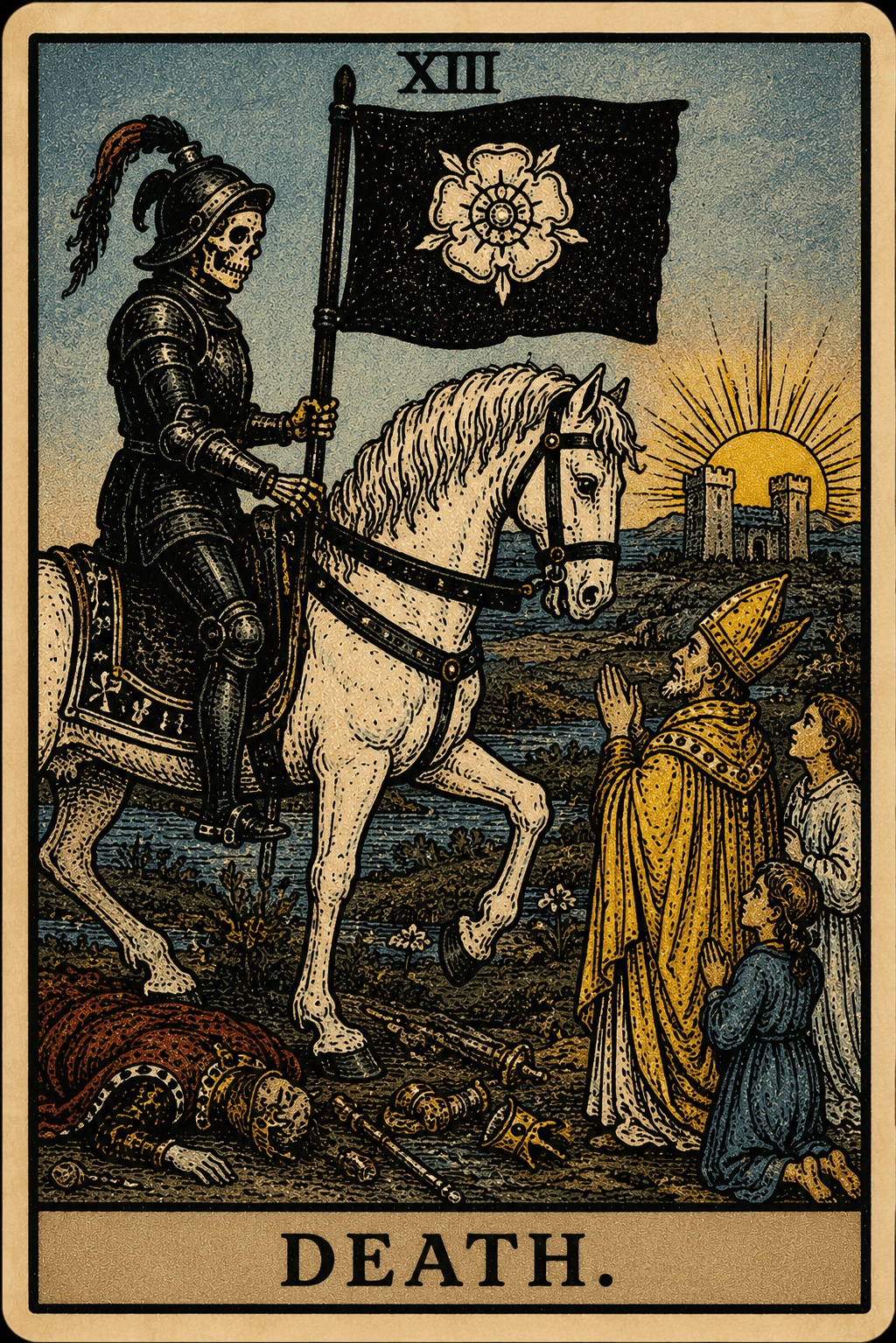
Tarot Card
Major ArcanaDeath: symbolism & imagery
A skeleton in armor rides forward (transformation is inevitable, not personal) a white rose on the banner for purity found through change, the sun rising behind him.
Death upright meaning
An ending that clears the way. Death is rarely literal: it marks transformation, the close of a chapter, and the release required before renewal can begin.
All 78 cards at a glanceDeath reversed meaning
Reversed, it can mean resistance to change, fear of an ending, or a transition stretched out far longer than it needs to be.
All 78 reversed meaningsDeath in love & relationships
Death in love marks an ending that clears the way: an old dynamic closing so something more honest can begin. It rarely means loss for its own sake; more often a relationship is transforming, or a pattern that no longer fits is falling away. Letting the ending complete is what makes renewal possible.
Free love tarot readingDeath in career & work
At work, Death signals that a role, project, or approach has run its course. Resisting the ending only prolongs it. The card favors accepting the close of one chapter so energy is freed for what comes next, genuine transformation, not just a cosmetic change.
Free career tarot readingDeath in money & finances
Financially, Death points to an old pattern (a habit, a source, a strategy) that needs to end before a healthier one can begin. Clinging to what's already finished holds you in place; releasing it clears room for something that actually works.
How Death feels
Grief mixed with the recognition that something needed to end.
Death: advice
Let the ending complete itself instead of trying to hold onto what's already over.
Death: reflection prompt
What are you still holding onto that has already ended?
Is Death a yes or no?
not in its current form, something must change first
Yes or no leanings for all 78 cardsDeath in combination
All combinationsWhat two cards do to each other is not on either card’s own page. These pairings are read in full elsewhere.
With The Tower
Death + The Tower
Two of the most intense transformation cards together. Death marks a necessary ending and release; The Tower brings sudden, external upheaval. Read side by side, they describe a profound clearing-out: an old structure collapsing so a truer one can be built. Disruptive and uncomfortable, but ultimately a reset that had to happen.
With The Hanged Man
The Hanged Man + Death
The pairing that separates waiting from ending. The Hanged Man is voluntary suspension. You could move and are choosing not to. Death is not optional. Together they usually mean a pause has run its course, and what could once have been waited out now has to be let go.
With The Lovers
Death + The Lovers
An ending inside a relationship, which is not the same as the ending of one. Death closes a chapter for good; The Lovers puts a choice in front of you. Together they usually describe a bond that cannot continue in its current shape, and a decision about what it becomes instead.
With The Star
Death + The Star
An ending followed by relief rather than dread. Death closes something permanently; The Star is what arrives in the space afterwards. Together they describe a conclusion that turns out to have been survivable, and often overdue.
With The Fool
The Fool + Death
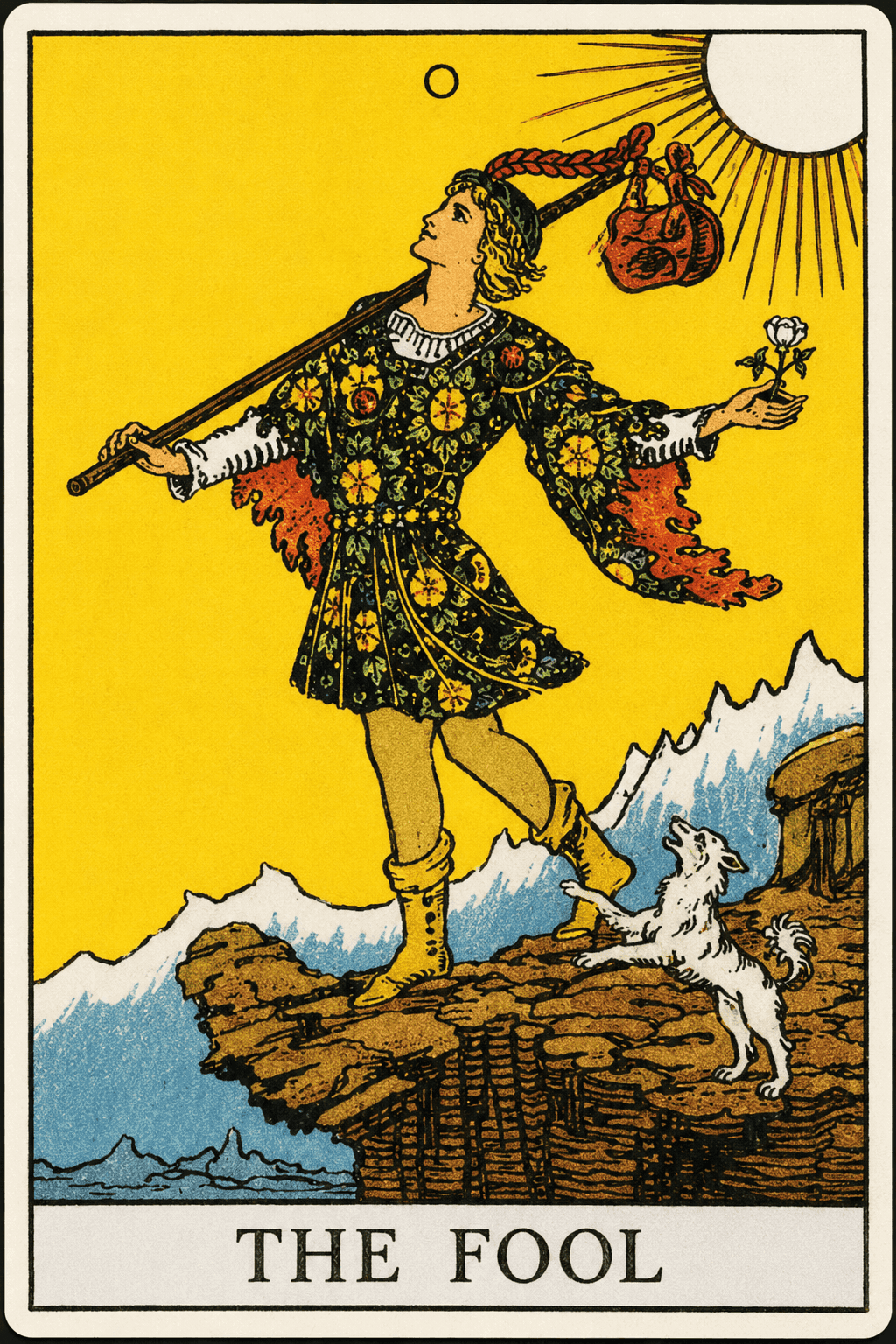
An ending and a beginning with nothing in between. Death closes something for good; The Fool steps out with no plan and no history attached. Together they describe starting over because there is no version of the old thing left to return to.
Death: frequently asked questions
What does Death mean?
An ending that clears the way. Death is rarely literal: it marks transformation, the close of a chapter, and the release required before renewal can begin.
What does Death mean reversed?
Reversed, it can mean resistance to change, fear of an ending, or a transition stretched out far longer than it needs to be.
What does Death mean in love?
Death in love marks an ending that clears the way: an old dynamic closing so something more honest can begin. It rarely means loss for its own sake; more often a relationship is transforming, or a pattern that no longer fits is falling away. Letting the ending complete is what makes renewal possible.
Is Death a yes or no card?
not in its current form, something must change first
Is Death a Major or Minor Arcana card?
Death is one of the 22 Major Arcana, the trump cards that carry no suit and no element. That is why it describes a broad theme rather than naming a specific part of life the way a Minor Arcana card does.
Which tarot cards pair notably with Death?
Death has worked-through pairings with The Tower, The Hanged Man, The Lovers, The Star, The Fool. Each of those combinations reads differently from either card alone, because the two cards modify each other rather than simply adding up.
Terms on this page
Full glossaryMore of the Major Arcana
View all Major ArcanaMajor Arcana
Temperance
balance · moderation · harmony
Major Arcana
The Devil
attachment · restriction · temptation
Major Arcana
The Tower
upheaval · revelation · awakening
Major Arcana
The Star
hope · renewal · inspiration
Major Arcana
The Moon
uncertainty · illusion · intuition
Major Arcana
The Sun
joy · vitality · clarity
Related guides
Guide
How to Read Tarot Cards: A Beginner's Guide That Skips the Fluff
You don't need to memorize 78 meanings or buy anything to start reading tarot. Here's the short, honest version: ask a real question, pull a simple spread, and read the cards as one conversation.
Guide
Yes or No Tarot: How to Get a Clear Answer Without Fooling Yourself
Yes/no tarot is the most popular kind of reading and the easiest to do badly. Here's how to read a single card for a leaning, and why the honest answer is usually one layer beneath the question.